High Fat Low Carb Plan That Melts Belly Fat and Boosts Energy
A strong high fat low carb eating plan helps shrink belly fat, keeps blood sugar steady, and boosts energy all day. When you follow this plan well, your body shifts from using sugar as fuel to using stored fat. In this guide, you will learn how to build a lasting high fat low carb plan, choose the right foods, plan your meals, and steer clear of common pitfalls.
What Is a High Fat Low Carb Diet?
A high fat low carb (HFLC) diet means that you get most calories from good fats, keep protein at a medium level, and lower your carbohydrate intake.

Typical macronutrient ranges:
- Fat: 60–75% of total calories
- Protein: 15–25% of total calories
- Carbohydrates: 5–20% of total calories
(commonly 20–100 g net carbs per day, based on your needs)
You may hear “keto” and “low carb” used together. A strict ketogenic diet is one type of HFLC plan with very few carbs (<20–30 g net carbs). Yet, you do not have to reach full ketosis to see changes in belly fat and energy.
How a High Fat Low Carb Plan Targets Belly Fat
Belly fat, especially fat that sits deep near your organs, relates to insulin resistance, inflammation, and other health issues. A HFLC plan works by a few simple ideas:
1. Lower Insulin Levels
Carbs such as sugars and refined grains make your body release more insulin. Insulin tells your body to store fat and stops fat burning when high.
Cutting back on carbs:
- Lowers insulin levels
- Lets your body reach stored belly fat
- Slows the storage of new fat around the waist
In time, this change can shrink your waistline and reduce deep belly fat.
2. Increased Fat Burning
With a steady high fat low carb plan, your body slowly changes its main fuel from sugar to fat.
- You burn more fat between meals and at night.
- Your liver makes ketones. These serve as a strong fuel for the brain and muscles.
- Fat stored in the belly is used for energy.
Many studies show that low-carb diets reduce belly fat more than high-carb diets, even when calorie intake is similar.
3. Reduced Hunger and Cravings
It is easier to lose belly fat when you do not feel hungry all the time. Eating good fats and enough protein:
- Boosts the hormones that make you feel full
- Keeps blood sugar more steady, so you crave less
- Helps you eat fewer calories naturally without keeping strict track of portions
Why High Fat Low Carb Can Boost Energy
Many people choose a high fat low carb lifestyle to lose weight, and they stay because they feel more energetic. Here is why this plan can make your day easier:
Stable Blood Sugar
With fewer, high-quality carbs:
- You see fewer spikes and falls in your blood sugar
- Your mood stays more steady, and your mind feels clear
- You avoid the tired feeling after meals
Access to a Steady Fuel Supply
If you rely on many carbs, your body asks for food often. When you change to fat as fuel:
- Your body uses stored fat between meals
- You need snacks less often
- Many find they can go longer without eating
Brain Benefits From Ketones
When your carb intake stays low and you produce ketones:
- Your brain gets a steady, clean fuel
- Many notice sharper focus, better attention, and less foggy thinking
Who Is a High Fat Low Carb Plan For?
This plan helps those who:
- Carry extra fat around the abdomen
- Struggle with strong sugar or carb cravings
- Feel weak after high-carb meals
- Have been told they show signs of insulin resistance
- Have tried low-fat, calorie-cut diets without lasting results
The plan may not be right for everyone. Those with some health conditions (like pancreatitis, certain gallbladder issues, specific metabolic disorders, or advanced kidney disease) should talk with a healthcare worker before changing their diet.
Women who are pregnant or breastfeeding, and those on medications for blood sugar or blood pressure, should work with a professional on any changes.
Core Principles of an Effective High Fat Low Carb Plan
To lose belly fat and boost energy safely, center your plan on food quality and balance and not just on numbers.
1. Pick Whole, Unprocessed Foods
Let most of your food come from items that:
- Have one ingredient or are made with few additions
- Bring a mix of nutrients
- Do not supply artificial fats or very refined oils
2. Choose Healthy Fats
Not all fats work the same. Base your meals around these types:
- Monounsaturated fats:
• Extra-virgin olive oil
• Avocados and avocado oil
• Olives
• Nuts like macadamias, almonds, and hazelnuts - Natural saturated fats (in modest amounts):
• Grass-fed butter or clarified butter
• Coconut oil and coconut items
• Fatty cuts of meat from pasture-raised animals - Omega-3 fats:
• Wild-caught salmon, sardines, and mackerel
• Anchovies
• Eggs from pasture-raised chickens
Try to limit:
- Industrial seed oils (soybean, corn, canola, cottonseed, sunflower, grapeseed)
- Deep-fried fast food
- Margarine and any hydrogenated fats
3. Keep Protein at a Healthy Level
Not enough protein can slow fat loss and drop energy. Too much protein may affect the state of ketosis in tight ketogenic plans. For most HFLC plans:
Aim for:
- About 0.7–1.0 grams of protein per pound of your target weight
- Roughly 25–35 g of protein per main meal
Good protein choices include:
- Eggs
- Chicken or turkey
- Beef, lamb, or pork (choose lean or moderately fatty cuts)
- Fish and seafood
- Unsweetened Greek yogurt or cottage cheese (if you digest dairy well)
- Tofu, tempeh, and other less processed soy products
4. Cut Carbs Smartly
Rather than remove all carbs, focus on cutting the most troublesome ones:
- Sugary drinks, candies, baked sweets
- White bread, white rice, regular pasta
- Chips, crackers, and most prepackaged snacks
Keep most of your carbs from:
- Non-starchy vegetables like leafy greens, broccoli, and zucchini
- Small servings of fruits like berries, kiwi, or citrus
- Occasional starchy vegetables or whole grains if they fit your plan
Best Foods for a High Fat Low Carb Belly-Fat Plan
This list shows good HFLC food choices:

Proteins
• Eggs
• Chicken thighs, drumsticks, or breast
• Grass-fed beef (ground beef, steak, roast)
• Pork (tenderloin, chops, or shoulder in modest portions)
• Turkey
• Salmon, sardines, mackerel, tuna
• Shellfish such as shrimp, mussels, or scallops
• Tofu, tempeh, or seitan
Fats
• Extra-virgin olive oil
• Avocado and its oil
• Grass-fed butter or clarified butter
• Coconut oil, coconut milk, or coconut cream
• Nuts (almonds, walnuts, macadamias, pecans)
• Seeds (chia, flax, pumpkin, sunflower)
• Nut butters with no added sugar
Low-Carb Vegetables
• Spinach, kale, arugula, or mixed greens
• Broccoli, cauliflower, or Brussels sprouts
• Zucchini, eggplant, or cucumber
• Bell peppers, mushrooms, or asparagus
• Cabbage, bok choy, or green beans
Lower-Sugar Fruits (in small amounts)
• Berries (strawberries, blueberries, raspberries, blackberries)
• Kiwi
• Grapefruit or small servings of citrus
Sample 7-Step Starter Strategy
Start your high fat low carb journey with these simple steps:
- Remove sugary drinks such as soda, juice, sweetened coffee, or energy drinks. Replace them with water, sparkling water, herbal tea, or plain black coffee with cream.
- Cut out refined grains like white bread, white rice, regular pasta, and baked sweets. Instead, eat non-starchy vegetables and a small dose of whole-food carbs if needed.
- Add fat to your meals—try a spoon of olive oil on vegetables, half an avocado at lunch, or a small handful of nuts for a snack.
- Make sure each meal has enough protein (about 25–35 g per meal) to support your muscles and help you feel full.
- Pack your plate with low-carb vegetables—aim for one to two cups at each meal.
- Plan simple HFLC breakfasts and lunches by keeping a few go-to recipes that cut down on choices.
- Lower your carb intake slowly, week by week, until you reach a level that helps you lose fat and feel well (often 20–75 g net carbs per day).
A Sample Day on a High Fat Low Carb Plan
Use this day as an example. Adjust portions to match your hunger and goals.
Breakfast
• 3 eggs cooked with butter or olive oil
• Spinach and cherry tomatoes, lightly sautéed
• ½ avocado on the side
• Black coffee or coffee with heavy cream (no sugar)
Why it works: The meal has enough fat and protein with few carbs. It fills you up and keeps your energy steady in the morning.
Lunch
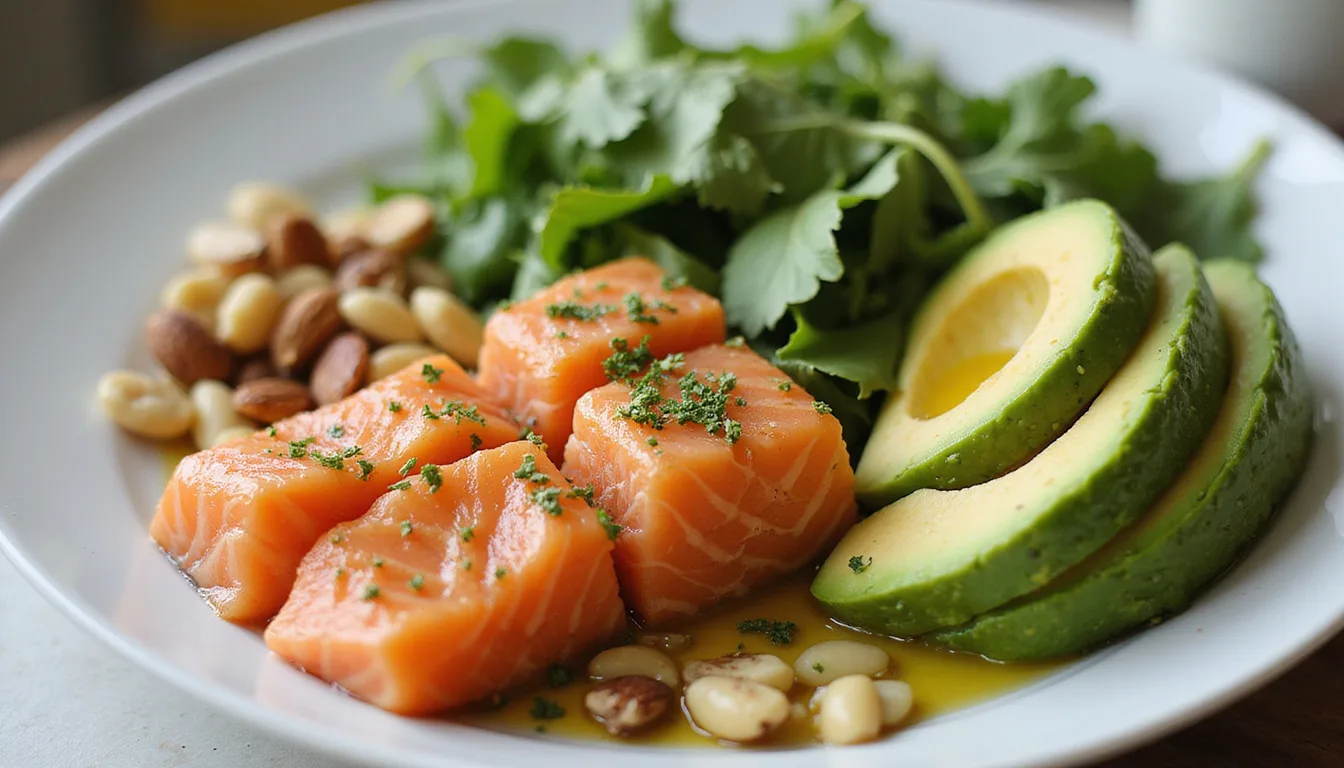
• Big salad with mixed greens, arugula, cucumber, and peppers
• 4–6 oz of grilled chicken thighs or salmon
• A dressing made with 2 tablespoons of extra-virgin olive oil, vinegar, herbs, and salt
• A small handful of walnuts
Why it works: This meal brings many nutrients. It supplies fiber and healthy fats, a moderate amount of protein, and few carbs.
Snack (if needed)
• A small handful of macadamia nuts
• Or celery sticks with 2 tablespoons of almond butter
Dinner
• 5–6 oz grass-fed beef burger patty (without a bun)
• 1–2 cups of roasted broccoli and cauliflower drizzled with olive oil
• A side salad with olive oil and a squeeze of lemon
Optional dessert
• ¼–½ cup berries with a spoonful of unsweetened whipped cream or full-fat Greek yogurt (if you can fit it into your carb limit)
Common Mistakes on a High Fat Low Carb Diet (and How to Fix Them)
Even a smart high fat low carb plan can go off track when you make these errors:
-
Eating processed low-carb snacks instead of real food
• Mistake: Depending too much on packaged bars, shakes, and baked items.
• Fix: Use these items only once in a while. Base your diet on whole foods like meat, fish, eggs, vegetables, nuts, and seeds. -
Eating too little protein
• Mistake: Focusing on fat and cutting protein too far.
• Fix: Aim for at least 25–35 g of protein at each main meal to care for your muscles and mood. -
Not taking in enough salt and other minerals
• Mistake: Low carbs make your body send salt and water out. This can cause headaches, tiredness, or cramps.
• Fix: Add salt to your food, sip broth, and get magnesium and potassium from greens, avocado, and nuts. You may also use a supplement if a health expert agrees. -
Dropping carbs too fast
• Mistake: Going from high to very low carbs overnight may bring fatigue and strong cravings.
• Fix: Lower your carbs slowly over one to three weeks. Give your body time to adjust. -
Ignoring how many calories you eat
• Mistake: Believing that you can eat endless fat because carbs are low, which may lead to eating too many calories.
• Fix: Eat until you feel comfortably full. Use signals like waist size, weight, and how well your clothes fit to check your progress.
Safety, Side Effects, and When to Be Cautious
At the start of a high fat low carb plan, you may notice:
• Headache
• Mild fatigue
• Feeling cranky
• Cravings
• Changes in sleep
These signs usually fade over one to two weeks as your body adjusts. Keep up your water intake, salt, and enough food to help this shift.
Talk with a health expert before you start if you:
• Have type 1 diabetes or use insulin
• Take medicine for type 2 diabetes or high blood pressure
• Have a history of eating issues
• Live with kidney disease, advanced liver disease, or pancreatitis
• Are pregnant or breastfeeding
Changes in your blood sugar and pressure may require adjustments in your medicines.
Measuring Progress Beyond the Scale
For belly fat and energy, the scale is one sign among many. Watch for these markers:
• Waist size: Measure around your navel each week
• How your clothes fit: Notice changes, especially near your belly
• Energy: Rate how you feel each day on a simple 1–10 scale
• Cravings: Note lessening of sugar and snack urges
• Sleep and mood: Many see a lift in sleep and mood when blood sugar stays steady
These signs may show progress before changes appear on the scale.
Simple High Fat Low Carb Meal Ideas
Mix and match these meals for variety and ease:
• An omelet with cheese, mushrooms, and spinach cooked in butter
• A burger without a bun, topped with cheese, avocado, and a side salad
• Chicken thighs baked with herbs and olive oil and roasted Brussels sprouts
• Zucchini noodles with a meat sauce made from ground beef and tomatoes (no added sugar)
• Salmon baked with lemon and olive oil, paired with asparagus
• A large salad with tuna, olives, hard-boiled eggs, and an olive oil dressing
• Tofu stir-fry with low-carb vegetables cooked in coconut oil (use tamari if you avoid sugary sauces)
FAQ: High Fat Low Carb, Belly Fat, and Energy
1. Can a high fat low carb diet really burn belly fat?
Yes. A well-built high fat low carb diet helps lower insulin and lets the body use stored fat for fuel. With enough protein, whole-food fats, and many vegetables, this method can shrink your waist.
2. How many carbs should I eat on a low carb high fat plan?
It depends on your goals and how your body reacts. Common ranges are:
• 20–30 g net carbs per day for strict ketogenic diets
• 30–75 g net carbs per day for a moderate low carb plan
• 75–100 g net carbs per day for a plan with a bit more flexibility
Many people find that 20–75 g net carbs per day helps reduce belly fat and keeps energy high.
3. Is a high fat low carb diet safe long term?
For many, a low carb high fat diet built on whole foods works well over time. It can improve markers like triglycerides, HDL cholesterol, and blood sugar control. The key is to focus on good fats, enough protein, many vegetables, and regular checks with a health expert to watch your blood work.
Your Next Step: Start Your High Fat Low Carb Reset
If you are done with stubborn belly fat, energy drops, and constant cravings, a well-set high fat low carb plan can help you reset your body. You do not need to change everything at once. Start by cutting out sugary drinks, adding good fats and protein to your meals, and building your plate around colorful, low-carb vegetables.
Try a 30-day plan: track your waist, your energy, and how you feel after meals. Each week, adjust your carb level and food choices based on your results. As you see your belly shrink and your appetite calm, your mind and body will benefit.
Begin today with your next meal. Make it rich in quality fats, steady in protein, low in refined carbs, and built from real food. Your future health, energy, and confidence begin with that choice.
[center]Always consult with your doctor prior to making drastic diet changes.[/center]
[center]As an Amazon Affiliate, Savvy Keto makes a small commision (at no extra cost to you) on any purchases you make thru affiliated links you click on.[/center]