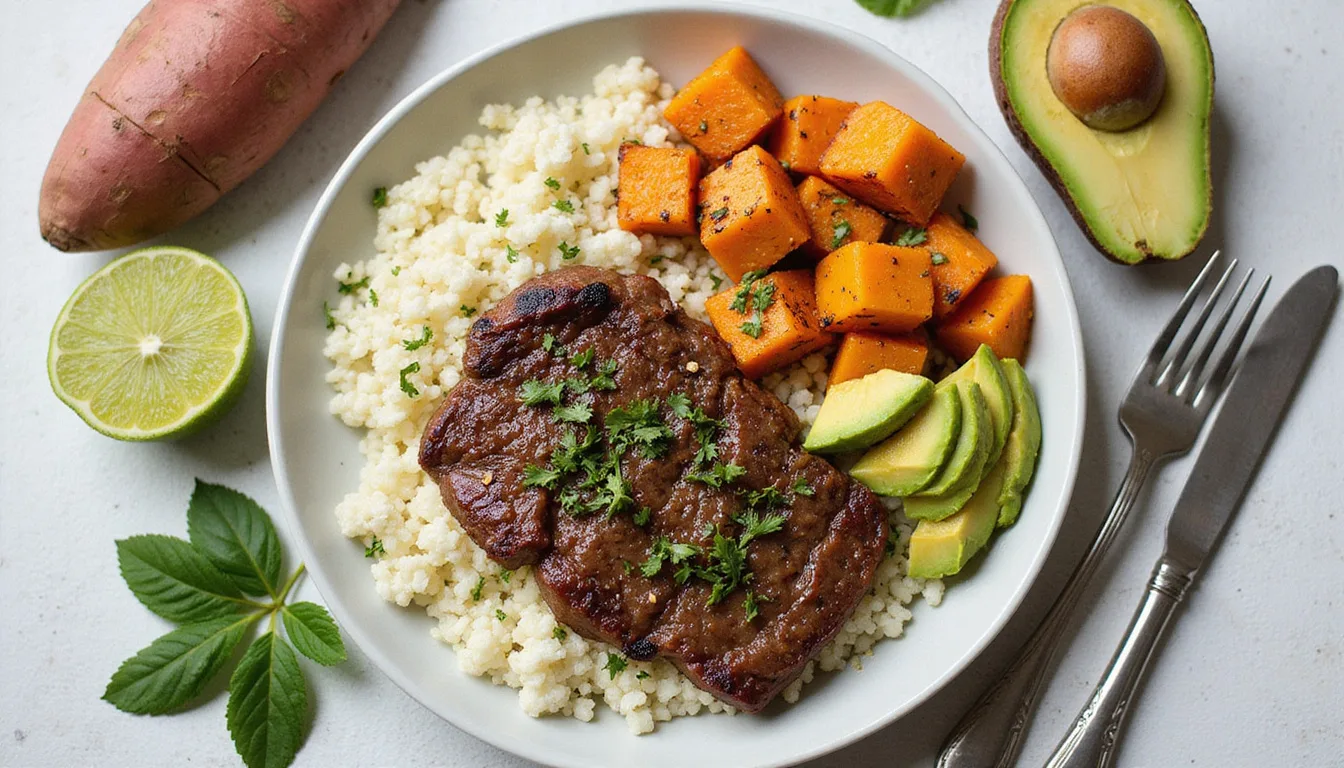
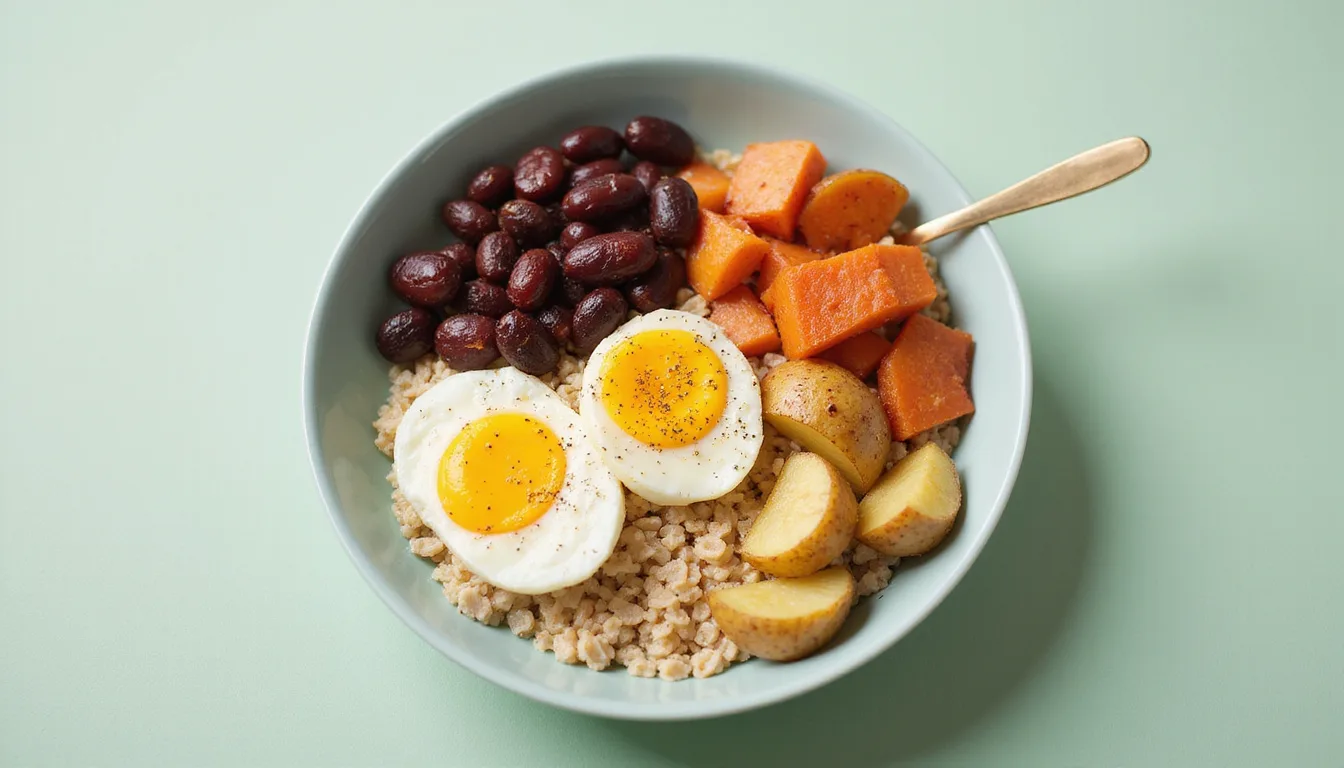
If you have ever eaten a meal and found yourself hungry an hour later, you have seen the point of the satiety index. This index helps explain why some foods keep you full longer while others leave you wanting more. It shows you which foods help you manage hunger, support a balanced weight, and leave you satisfied without counting calories.
This guide explains the satiety index in plain words and turns the science into simple habits you can use every day.
What Is the Satiety Index?

The satiety index measures how full a food makes you feel compared to white bread (or in some studies, white potatoes). In the study, people ate 240-calorie servings of various foods and then told researchers how full they felt over the next two hours. Each food received a score:
- White bread = a baseline score of 100
- Foods that leave you fuller than white bread = score over 100
- Foods that leave you less full than white bread = score under 100
For example:
- Boiled potatoes scored about 323 (very filling)
- Oatmeal scored about 209 (quite filling)
- Croissants scored about 47 (not very filling)
In real life, the index helps you ask: "If I eat 200 calories of this food, how long will I feel satisfied compared to other foods?"
Why Satiety Matters More Than Just Calories
Counting calories alone misses an important fact: not all calories work the same way with your hunger and eating choices.
Two lunches might each be 500 calories, but:
- Lunch A fills you for 4–5 hours
- Lunch B leaves you hungry in 60–90 minutes
Choosing foods that keep you full longer can help you:
- Cut down on snacking and overeating
- Keep a balanced weight with less strain
- Keep energy levels steady and avoid sugar dips
- Feel more in control about food
The idea is to change your food choices so that hunger helps you instead of working against you.
The Key Drivers of Satiety
The satiety index depends on a few features of food. More of these features means the food fills you better.
1. Protein: The Most Satisfying Macronutrient
Protein often makes you feel full for the most extended period. It:
- Keeps you full longer than carbohydrates or fat
- Helps build and support muscle
- Makes you burn a few extra calories to digest it
Protein foods include: eggs, Greek yogurt, cottage cheese, chicken breast, fish, tofu, tempeh, and lentils.
Try to include protein in every meal and many snacks. This tip can greatly boost how satisfied you feel.
2. Fiber: Volume Without Many Calories
Fiber adds body to food and slows down digestion. It:
- Makes your stomach feel larger
- Helps keep your blood sugar and energy even
- Reduces fast hunger spikes
High-fiber foods include: beans, lentils, chickpeas, oats, barley, berries, pears, apples, leafy greens, carrots, chia, and flax seeds.
Many top-ranking foods on the satiety index are high in fiber and low in calories, such as boiled potatoes and oatmeal.
3. Water Content: Filling Your Stomach, Not Your Calorie Budget
Foods with high water content fill your stomach but add few calories. This action helps send a signal to your brain that you are full.
High-water foods include: soups, stews, fruits, vegetables, Greek yogurt, and cottage cheese.
To compare:
- 200 calories of chips give a small amount and fill you little
- 200 calories of vegetable soup give a large bowl and fill you well
Even with the same calories, the space taken by the food is different.
4. Food Volume and Texture: How Long You Spend Eating
Foods that need more chewing and take longer to eat work well for fullness. Whole foods usually help more than processed ones.
For example:
- A whole orange fills better than orange juice
- Whole grains fill better than white bread
- A baked potato fills better than potato chips
Your brain needs a few moments to register fullness. Foods that slow down your eating help you avoid overeating before your body sends the full signal.
5. Low Energy Density: Fewer Calories Per Gram
Energy density means how many calories come with a certain weight of food. Foods low in energy density give you more bulk with fewer calories.
Examples include:
- Most vegetables
- Fruits
- Potatoes (especially boiled or baked)
- Broth-based soups
- Legumes like beans, lentils, and chickpeas
This idea is important in studies on long-lasting weight loss and appetite control (source: Harvard T.H. Chan School of Public Health).
High vs. Low Satiety Foods: Practical Examples
Seeing the satiety index in real samples makes it easier to understand.
Typically High-Satiety Foods
These choices often score high or are expected to:
- Boiled or baked potatoes (plain or lightly seasoned)
- Oatmeal or steel-cut oats
- Whole fruits (especially apples, oranges, and berries)
- Eggs (boiled or scrambled with veggies)
- Greek yogurt or cottage cheese
- Beans, lentils, and chickpeas
- Fish (especially white fish)
- Lean meats like chicken breast or turkey
- Vegetables such as salads, soups, or stir-fries
Typically Low-Satiety Foods
These choices often have many calories but little fiber, protein, or water:
- Pastries such as croissants, donuts, or Danish
- Chips and crisps
- Candy and chocolate bars
- Sugary breakfast cereals
- White bread and refined crackers
- Sugary drinks and juices
- Many fast-food items like a burger with fries and a sweet drink
You see that foods with strong flavors and soft, fatty textures often score low. They are easy to eat in large amounts before you feel full.
Simple Habits to Use the Satiety Index in Everyday Life
There is no need to remember a long list of numbers. Focus on a few habits that shape your diet toward foods that keep you full longer.
1. Anchor Every Meal With Protein
Start each meal by choosing a protein source, then build your meal around it.
Examples:
-
Breakfast:
- Greek yogurt with berries and oats
- Eggs with whole-grain toast and sautéed spinach
- Cottage cheese with fruit and a sprinkle of nuts
-
Lunch:
- A lentil soup with a side salad
- A chicken or chickpea salad with many vegetables
- Tuna or salmon on whole-grain bread with veggies
-
Dinner:
- Baked fish with roasted potatoes and green beans
- Tofu stir-fry with mixed vegetables and brown rice
- Turkey chili with beans and steamed vegetables
If you feel hungry soon after meals, try slowly adding more protein.
2. Add Fiber and Volume, Not Just “Less Food”
Instead of only reducing portions, make your meals larger but smarter:
- Add an extra serving of vegetables at lunch and dinner
- Choose whole fruits instead of juice
- Swap white rice for beans, lentils, or barley in some meals
- Start with a salad or a broth-based soup
You are not eating less; you are filling your plate with foods that keep you full.
3. Use Potatoes and Oats as Affordable Fullness Foods
Potatoes and oats are foods that fill you up well. They are also cheap and easy to change.
-
For potatoes:
- Boil or bake them with the skin on
- Top with Greek yogurt, salsa, beans, or veggies, not heavy butter or cream
- Use in hearty salads or bowls
-
For oats:
- Eat oatmeal with fruit and a protein source (such as eggs, Greek yogurt, or protein powder)
- Try overnight oats with chia seeds and berries
- Enjoy savory oats with egg and vegetables
Simple recipes with these foods can fill you longer than many "diet" foods.
4. Choose Snacks That Require Chewing
Switch soft, highly processed snacks for ones that take time to chew and digest:
- Instead of cookies, candy, or chips
- Try:
- An apple or pear with a small handful of nuts
- Carrot sticks with hummus
- Greek yogurt with berries
- Hard-boiled eggs
- Air-popped popcorn with a light seasoning
These snacks fill you better because they have fiber, protein, or many solid parts.
5. Limit Liquid Calories When You Can
Drinks like soda, juice, or sweet coffee are not as filling since your body does not chew them.
For the best results:
- Eat whole fruits rather than drink juice
- Choose water, unsweetened tea, or black coffee as your main drink
- Treat sugary drinks as a rare treat, not a daily habit
Smoothies with protein (like Greek yogurt or protein powder) and fiber (oats, chia, or flax) work better than plain drinks, but they still usually fall behind solid meals.
6. Use Fats Wisely for Fullness
Healthy fats can help keep you full, but too much fat adds calories without much bulk.
How to balance fats:
- Use small amounts of nuts, seeds, avocado, or olive oil
- Pair fats with protein and fiber (for example, avocado on whole-grain toast with eggs or nuts on Greek yogurt)
Try to enjoy a moderate amount of fat with meals that have proteins and fibers rather than meals that are very high or very low in fat.
One Simple Framework: Building a High-Satiety Plate
When you plan a meal, use this quick checklist. See if you can include at least three out of these four parts:
-
Protein
- Examples: Eggs, fish, poultry, tofu, tempeh, beans, lentils, Greek yogurt
-
Fiber / Whole Plant Foods
- Examples: Vegetables, fruits, whole grains, beans, lentils, nuts, seeds
-
Volume / Water-Rich Foods
- Examples: Salads, soups, vegetables, fruits
-
Smart Fats (Optional but Helpful)
- Examples: Nuts, seeds, avocado, olive oil, fatty fish
If you are hungry between meals, try this order to adjust your meal:
- First, add more protein
- Then add more fiber and volume
- Then check if your meals are too small
Sample High-Satiety Day of Eating
Here is one way to plan a day with the satiety index in mind.
Breakfast
- A bowl of oatmeal cooked with milk or fortified plant milk
- Topped with blueberries, chia seeds, and a scoop of Greek yogurt
Why it works: Oats give fiber; yogurt adds protein; chia gives fiber and fat; fruit adds volume and fiber.
Snack
- An apple with a small handful of almonds
Why it works: The fruit is crunchy and full of fiber. The nuts add fat and some protein.
Lunch
- Lentil and vegetable soup
- A side salad with mixed greens, tomatoes, cucumber, and chickpeas
Why it works: Lentils pack protein; legumes add fiber; the broth and veggies provide water and volume.
Snack (if needed)
- Carrot sticks with hummus
Why it works: Veggies add fiber. Hummus provides protein and some fat.
Dinner
- Baked salmon or tofu
- Boiled or roasted potatoes (with skin on)
- Steamed broccoli and carrots
Why it works: Salmon or tofu gives protein; potatoes give a filling starch; the vegetables add volume and fiber.
You can change the foods while keeping the pattern of protein, fiber, and volume.
Common Myths About the Satiety Index
“High satiety foods are all bland ‘diet’ foods.”
This is not true. Meals with high-satiety ingredients can be very tasty. Think of dishes like lentil curries, bean chilies, baked potatoes with spices, stir-fries full of vegetables, or yogurt mixed with fruit and nuts.
“If a food is high on the satiety index, I can eat it without limits.”
The satiety index helps you feel full with fewer calories, but it does not cancel out the need for balance. You can still put on weight if you regularly eat more calories than you burn – even if the food is filling.
“Low satiety foods are always bad and must be removed.”
There is no need to remove any food entirely. The goal is to choose mostly foods that fill you well, so that the occasional treat that is less filling does not affect your overall balance.
Quick Reference: High-Satiety Swaps
Try switching your usual items with ones that usually score higher on the satiety index:
- White bread → Whole-grain bread or boiled potatoes
- Sugary cereal → Oatmeal with fruit and nuts
- Fruit juice → Whole fruit with water
- Candy bar → Greek yogurt with berries
- Chips → Air-popped popcorn or roasted chickpeas
- Creamy pasta → Whole-grain pasta with chicken or beans and extra vegetables
- Large sugary latte → A smaller coffee paired with a high-protein snack
Even one or two swaps a day can change how you feel regarding hunger.
FAQ: Understanding the Satiety Index and Fullness
1. How can I use a satiety index chart to help me lose weight?
You do not need to follow a chart exactly. Use it as a guide. Focus on foods that many studies have shown to fill you well – like boiled potatoes, oats, beans, lentils, fruits, vegetables, eggs, fish, and Greek yogurt. Build most of your meals around these foods. You may then find it easier to eat fewer calories without feeling deprived.
2. Which foods have the highest satiety score?
In the original study, plain boiled potatoes scored the highest. Other filling choices include foods rich in fiber and water, like oatmeal, fish, fruit, and legumes. In everyday meals, options like lentil soup, bean chili, or a large salad with chicken or tofu usually leave you full longer than refined snacks and pastries.
3. Is the satiety index diet the best way to eat?
No single diet fits everyone. The satiety index is one tool. It guides you to choose meals with protein, fiber, and whole foods. This approach fits well with many healthy eating plans, whether you prefer a Mediterranean, plant-based, or other style of eating.
Turn Satiety Science Into Daily Practice
Feeling hungry often is not your fault. Your body sends signals when foods do not fill you enough. By following the satiety index and choosing more protein, fiber, and water-rich foods, you can change your meals so your body receives the message that it is full.
Do not count every calorie or memorize every number. Begin with small improvements:
- Add a protein source to every meal
- Replace one refined carbohydrate with a high-fiber option
- Increase the amount of vegetables or fruits in at least two meals per day
If you need help to create a meal plan that fills you well while matching your taste and schedule, your next step is simple. Pick one meal soon, and redesign it using these ideas. When you feel full for a longer time, you will be motivated to make more changes.
[center]Always consult with your doctor prior to making drastic diet changes.[/center]
[center]As an Amazon Affiliate, Savvy Keto makes a small commision (at no extra cost to you) on any purchases you make thru affiliated links you click on.[/center]