
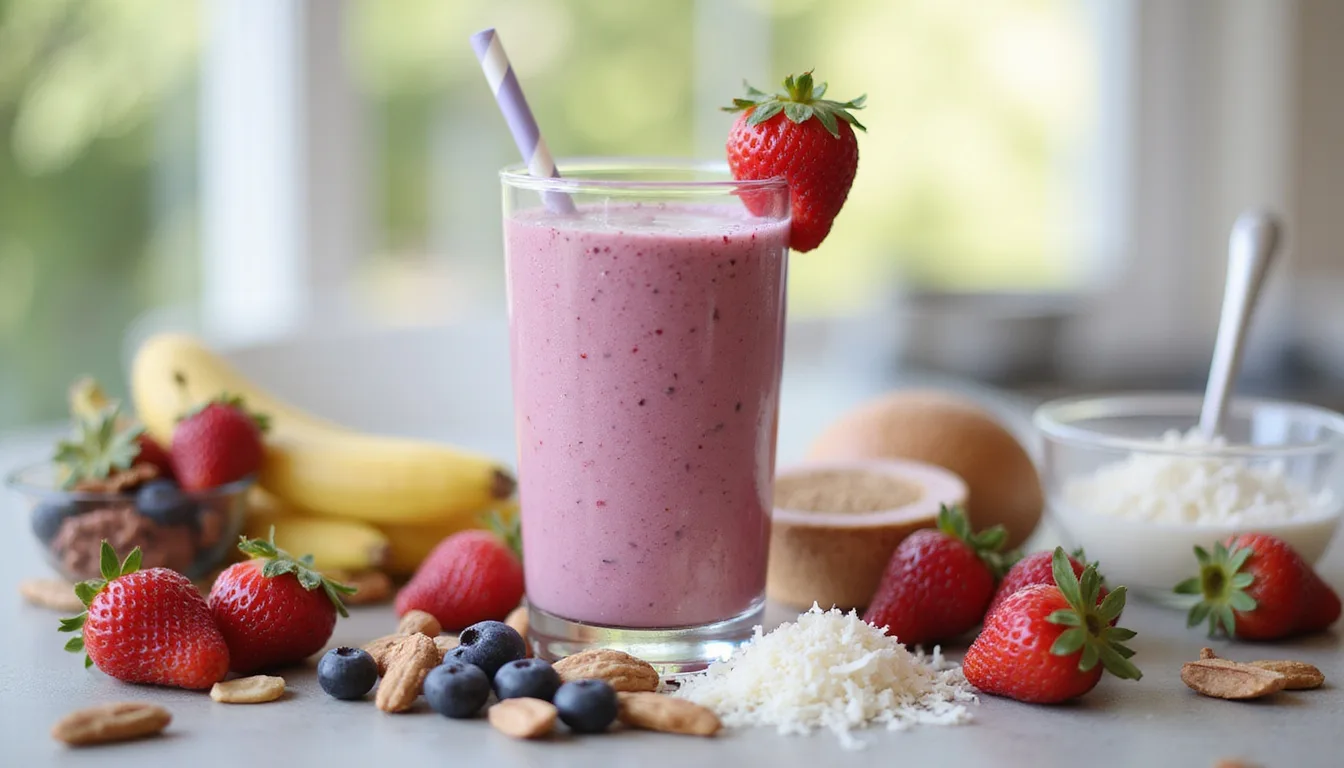
Protein shakes help your body. They support your fitness aims, speed up recovery, and keep you full between meals. Whether you want to build muscle, burn fat, or feel more awake, protein shakes can work with your life. The goal is to know your own needs, pick the right foods, and blend shakes you enjoy every day.
This guide explains how protein shakes work, shows you how to build a shake that fits your goal, and gives you simple, tasty recipes to try now.
Why Protein Shakes Work (and When They’re Worth It)

Protein helps with:
• Building and keeping muscle
• Fixing tissues after workouts
• Running your hormones, enzymes, and immune system
• Keeping you full longer than carbs or fat can
You can get protein from whole foods. Protein shakes give you three main upsides:
- Convenience – They help you meet your protein goal on busy days.
- Precision – You can count exactly how much protein you get.
- Digestibility – Shakes can feel lighter and are easier to digest after exercise.
Groups like the International Society of Sports Nutrition say that total protein every day matters more than when you eat it. Shakes make it simple to reach your goal (source: ISSN Position Stand).
How Much Protein Do You Need?
Your protein goal depends on your size, how active you are, and what you want to do.
A simple range is:
- Sedentary / light activity: about 0.8–1.0 g per kg body weight
- Active / strength training: about 1.4–2.0 g per kg
- Fat loss with resistance training: about 1.6–2.2 g per kg
Example:
If you weigh 70 kg (around 154 lbs) and lift 3–4 times each week, 105–140 g of protein a day is a good goal.
Protein shakes add to your daily total. Many people use 1–2 shakes a day (with 20–30 g of protein each) along with their meals.
Types of Protein Powders: Which One Is Right for You?
Your protein powder will affect taste, texture, digestion, and how full you feel. Here is a basic look.
1. Whey Protein
• Best for: Those who can eat dairy, need muscle gain, or want to recover fast.
• Pros:
- It gives all essential amino acids.
- It has high leucine to support muscle building.
- It mixes fast and tastes good.
• Cons:
- It is not for vegans.
- It may bother people with lactose problems or dairy allergies.
Whey isolate has less lactose and fewer carbs than whey concentrate. It can feel easier on the stomach.
2. Casein Protein
• Best for: Drinks at bedtime.
• Pros:
- It digests slowly; it may lower muscle breakdown overnight.
- It fills you well.
• Cons:
- Its thick feel may not suit everyone.
- It also comes from dairy.
3. Plant-Based Protein (Pea, Rice, Hemp, Blends)
• Best for: Vegans, vegetarians, or those who avoid dairy.
• Pros:
- It has no dairy and is kind to many allergies.
- Blends of plant proteins can give a full set of amino acids.
• Cons:
- Its texture may feel grittier.
- Its taste may be earthier; you may need to use more flavors.
4. Egg, Collagen, and Other Proteins
• Egg white: A high-quality protein from eggs, free from dairy, with a plain taste.
• Collagen: Helps joints, skin, and connective tissue. It is not a full protein by itself.
Bottom line: If you can have dairy, whey works well and mixes with many styles. If not, try a good plant blend and use foods that taste good.
Building the Perfect Protein Shake: A Simple Formula
Instead of learning many recipes, learn this basic structure:
Protein + Liquid + Creaminess + Flavor + Extras (optional)
1. Start with Protein
Aim for 20–30 g of protein each shake. This might mean:
• 1 scoop of protein powder (check the label) or
• A mix of powder and high-protein foods like Greek yogurt, cottage cheese, or tofu.
2. Choose Your Liquid
Your liquid affects calories, smoothness, and taste.
• For fewer calories: Use water, unsweetened almond milk, or coconut water (watch the sugars).
• For more creaminess: Use cow’s milk, soy milk, or oat milk.
• For extra protein: Use cow’s milk, soy milk, or high-protein milks.
3. Add Creaminess and Texture
These add-ons give your shake a smooth, milkshake-like feel:
• ½ frozen banana
• ¼–½ avocado
• 2–4 tbsp Greek yogurt
• 1–2 tbsp nut butter
• Ice cubes to thicken the shake
4. Add Flavor (and Micronutrients)
• Fruit like berries, banana, mango, or pineapple
• Cocoa powder for a chocolate boost
• Vanilla extract
• Spices such as cinnamon, nutmeg, or pumpkin spice
• Coffee or espresso for a mocha or latte taste
• Greens like spinach for extra nutrients (the taste stays light)
5. Extras (Optional)
• Oats for more carbs and calories (good when bulking)
• Chia or flax seeds for fiber and omega-3 fats
• Creatine powder (if you include it)
• A small pinch of salt to bring out the flavor
Protein Shakes for Different Goals
For Muscle Gain (Bulking)
You need extra calories along with enough protein.
Focus on:
• Liquids with more calories (like milk or soy milk)
• Extra carbs from oats, fruit, or honey
• Good fats from peanut butter or avocado
A shake for muscle gain might have 400–700 calories, based on your goal.
For Fat Loss (Cutting or Recomposition)
You want to feel full while keeping calories low.
Focus on:
• Liquids low in calories (water or almond milk)
• High protein content (25–35 g)
• Extra fiber from berries or chia seeds
• Minimal added sugars
Keep these shakes between about 150–350 calories.
For General Health and Convenience
Choose a balanced shake:
• A moderate 20–30 g of protein
• Fruit for vitamins and carbs
• A small amount of healthy fat for a full feeling
This kind of shake works as a snack, a quick breakfast, or after a workout.
10 Simple, Tasty Protein Shake Recipes
All recipes make 1 serving. Adjust ice and liquid to get the thickness you like.
1. Classic Chocolate Recovery Shake
Good after strength training.
• 1 scoop chocolate whey or plant protein
• 1 cup unsweetened almond milk (or regular milk)
• ½ frozen banana
• 1 tbsp peanut butter or almond butter
• 1 tbsp cocoa powder (optional for more chocolate)
• Ice cubes as needed
Blend well and drink up.
2. Berry Blast Antioxidant Shake
Light and full of antioxidants.
• 1 scoop vanilla protein
• 1 cup water or almond milk
• ¾ cup mixed frozen berries
• 1 tbsp ground flaxseed or chia seeds
• ½ tsp vanilla extract (optional)
Blend until smooth; add extra liquid if needed.
3. Lean Green Protein Shake
Great for fat loss or a nutrient boost.
• 1 scoop unflavored or vanilla protein
• 1 cup water or coconut water
• 1 cup fresh spinach (tightly packed)
• ½ frozen banana
• ¼ avocado
• Juice of ½ lime
Blend well until the greens are liquid.
4. Breakfast Oatmeal Protein Shake
It tastes like drinkable oatmeal. A quick breakfast choice.
• 1 scoop vanilla or cinnamon protein
• 1 cup milk or soy milk
• ¼ cup rolled oats (raw)
• ½ banana
• ½ tsp cinnamon
• Ice cubes if you like it cold and thick
Blend until the oats are soft.
5. Mocha Energy Protein Shake
A protein boost with coffee.
• 1 scoop chocolate or mocha protein
• ½–1 cup cold brewed coffee
• ½ cup milk or almond milk
• ½ frozen banana or a few ice cubes
• Optional: ½ tbsp cocoa powder for extra taste
Mix well and adjust the coffee to suit your caffeine needs.
6. Strawberry Cheesecake Protein Shake
A dessert-like shake that fits your macros.
• 1 scoop vanilla protein
• ¾ cup milk or almond milk
• ¼ cup low-fat Greek yogurt
• ¾ cup frozen strawberries
• ½ tsp vanilla extract
• 2–3 ice cubes
Blend until smooth to enjoy the dessert taste.
7. Tropical Sunshine Shake
Fruity and bright—good before or after a workout.
• 1 scoop vanilla protein
• 1 cup coconut water or water
• ½ cup frozen pineapple
• ½ cup frozen mango
• Juice of ½ orange (optional)
Blend until smooth. You may not need ice here.
8. High-Calorie Mass Gainer Shake
Perfect if you need extra calories.
• 1 scoop chocolate or vanilla protein
• 1 cup whole milk or soy milk
• ½ cup rolled oats
• 1 banana
• 2 tbsp peanut butter
• 1 tbsp honey (optional for more calories)
Blend well. This shake will be thick and filling.

9. Low-Carb Chocolate Peanut Butter Shake
Fit for low-carb or keto diets (adjust carbs as needed).
• 1 scoop chocolate protein (low-carb version)
• 1 cup unsweetened almond milk
• 1 tbsp peanut butter
• 1 tbsp heavy cream or ¼ avocado (for extra creaminess)
• 1 tbsp cocoa powder
• Ice cubes
If you want it sweeter, use a low- or no-carb sweetener.
10. Bedtime Casein Shake
A slow-digesting drink for sleep time.
• 1 scoop casein protein (vanilla or chocolate)
• 1 cup milk or almond milk
• 1 tbsp almond butter
• ½ tsp cinnamon (if vanilla) or 1 tbsp cocoa (if chocolate)
• Ice cubes
Blend until smooth. Use less liquid if you wish for a thicker, pudding-like feel.
When Is the Best Time to Drink Protein Shakes?
You can drink protein shakes any time. The timing can also work with your goals:
• Post-workout (within 1–2 hours):
Helps repair muscles if you have not eaten recently.
• Between meals:
Keeps you full and may stop overeating later.
• At breakfast:
Many people miss protein in the morning. A shake can fix that fast.
• Before bed (with casein or a mixed meal):
May limit muscle breakdown at night, especially if you are lean and active.
The total protein each day matters more than when you drink it. Use shakes when it fits your routine.
Common Mistakes People Make with Protein Shakes
To get the best from your shakes, avoid these errors:
-
Using shakes in place of real meals
Shakes add protein, but whole foods give more vitamins, minerals, and fiber. -
Believing shakes are “magic” weight-loss drinks
-
Adding too many calories by mistake
Nut butters, oats, milk, and sugars can raise your shake’s calories a lot. That is fine when bulking but not when cutting. -
Overlooking the quality of your ingredients
Poor powders may have a bad taste, texture, or unknown additives. Look for clear labels and tests that back quality. -
Not matching shakes to your own goals
Use more fruit, oats, and nut butter for bulking. Keep things simple and light if you want fat loss.
Simple Checklist for Dialing In Your Protein Shakes
Use this list when you build your shake:
-
Define your goal
- Muscle gain
- Fat loss
- Health and maintenance -
Set a protein target per shake (usually 20–30 g)
-
Choose your protein source
- Whey, casein, plant based, or a whole-food mix -
Pick a liquid based on calories and texture
-
Add 1–2 flavors for taste and creaminess
-
Add extra items only if they support your goal
-
Taste and adjust
- If it is too thick, add more liquid.
- If it is too thin, add ice, oats, or frozen fruit.
FAQ: Protein Shake Basics
1. Are protein shakes good for weight loss?
Yes. Protein shakes can work for weight loss if you use them right. Protein helps you feel full and saves muscle when you eat less. The key is to keep shakes low in calories and include them in a high-protein, calorie-controlled plan.
2. Can I build muscle with protein shakes alone?
No. Muscle building needs both resistance training and enough calories. Shakes help you hit your protein goal. Mix high-protein shakes with strength training and good sleep to see the best outcome.
3. Are homemade protein shakes healthier than ready-made ones?
Often they are. Homemade shakes let you choose each ingredient. You control the protein type, the sugars, the fats, and the overall calories. Store-bought shakes may be easy, but they sometimes cost more, have extra sugar, and offer fewer choices.
Take Action: Make Protein Shakes Work for Your Goals
If you want to change your body, build strength, or simply feel more awake and full during the day, protein shakes are a simple tool you can use now. You do not need fancy tools or a gourmet kitchen. All you need is a good blender, a protein that agrees with you, and a few basic extras.
Pick one recipe in this guide that fits your goal—whether for muscle gain, fat loss, or plain ease. Make it part of your routine for a week. Note how you feel in energy, hunger, recovery, and progress in the gym or on the scale. Then, adjust the ingredients and when you drink it until your shake works with your life.
Consistency beats perfection. Blend your first shake, try small changes as you go, and let these simple, tasty recipes help support your body goals.
[center]Always consult with your doctor prior to making drastic diet changes.[/center]
[center]As an Amazon Affiliate, Savvy Keto makes a small commision (at no extra cost to you) on any purchases you make thru affiliated links you click on.[/center]