
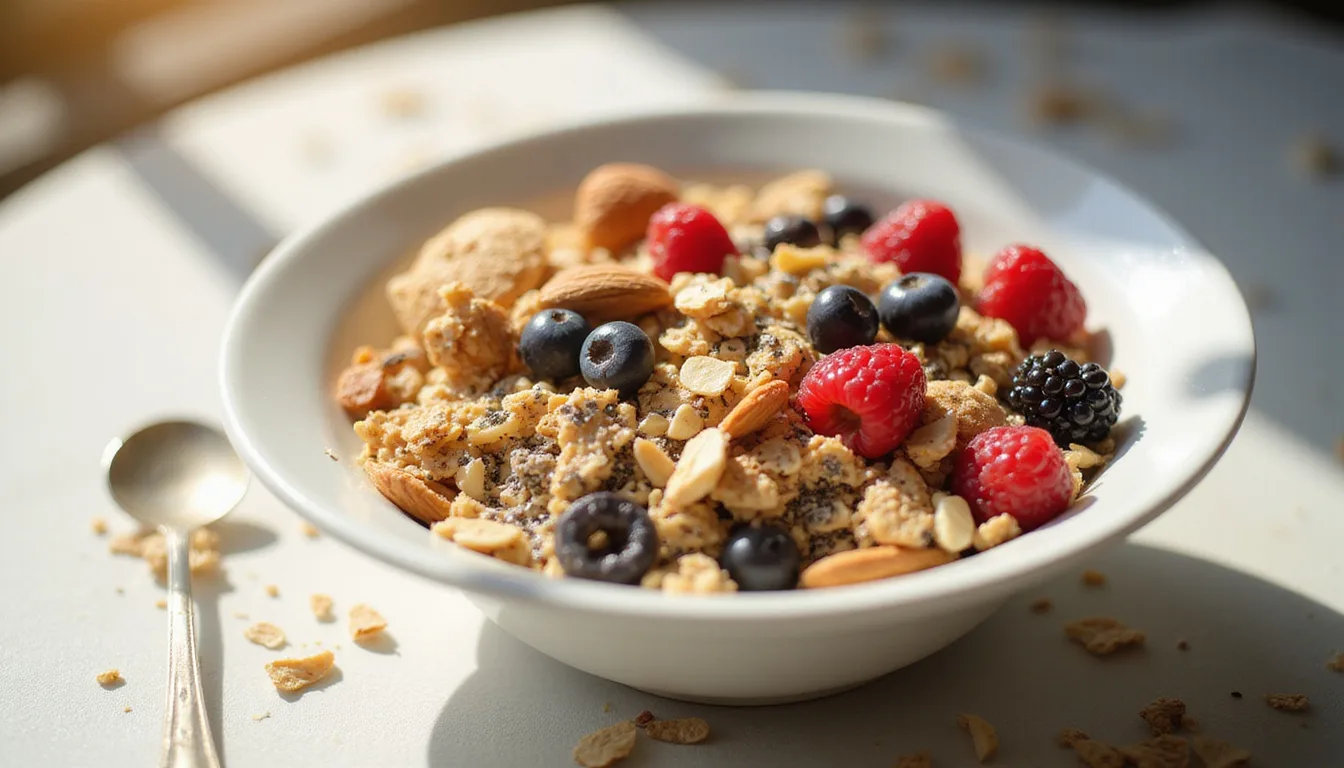
If you crave a crisp bite in the morning and want to keep sugar drops and mid-morning tired spells at bay, low carb cereal can work well. Done right, it cuts cravings, keeps your energy even, and supports weight control—all without tasting like dry paper. It helps when you know what fills your bowl, how your body gets it, and when you pick a swap that gives both good taste and needed nutrients.
Why Typical Breakfast Cereals Work Against Your Goals
Most boxed cereals are made in a factory, high in refined carbs, and loaded with sugar. Even when they wear a “healthy” tag, the numbers do not lie.
The problem with traditional cereal

• Refined grains and extra sugars cause blood sugar to peak fast and drop soon.
• Low protein and few healthy fats do not keep hunger away long, which makes you want to snack.
• Hidden sugars like cane sugar, rice syrup, maltodextrin, and fruit juice concentrate add up.
The Harvard T.H. Chan School of Public Health shows that many cereals for adults still have high added sugar. This fact adds a lot to your daily sugar intake.
When you try to keep blood sugar in line, cut cravings, or follow a low carb or keto plan, these cereals may bring hunger and low energy.
What Makes a Cereal Truly “Low Carb”?
Many packages show “low carb” or “keto” on the front, but the label does not tell all.
Key numbers to check
When you study low carb cereal, check these points:
• Total Carbohydrates: For a low carb plan, try for 10–15 g net carbs or less per serving.
• Fiber: More fiber means less net carbs and a fuller feeling.
• Added Sugars: Look for a count of 0–2 g added sugar per serving, and zero is best.
• Protein: Try for 8–15 g protein per serving so you feel full for more time.
• Fat: Healthy fats from nuts, seeds, or coconut can work to keep you satisfied.
Net carbs come by subtracting fiber and sugar alcohols (if you can handle those) from total carbs.
For example, if you have 18 g total carbs, 8 g fiber, and 4 g sugar alcohols, you get 6 g net carbs. This cereal is much better than one with 30 g total carbs and only 2 g fiber.
How Low Carb Cereal Helps Crush Cravings
Many times, cravings hide behind blood sugar swings. A big bowl of sugary flakes sends your sugar high and then a drop that calls for more carbs. Low carb cereal breaks that loop.
Stable blood sugar
A low carb and high fiber breakfast slows the flow of sugar into your blood. This gives you:
• Fewer angry, hungry moments
• Less searching for sugar later in the day
• Better focus at work or home
Better appetite control
Protein and healthy fats fill you up naturally. When your breakfast has a protein-rich low carb cereal, you get to:
• Feel full faster
• Stay full for longer periods
• Avoid random snacking
This effect helps reduce overall calorie intake without a strict diet.
The Energy Advantage: Why Low Carb Cereal Can Boost Your Day
When your first meal has too much sugar, energy rides a roller coaster. A low carb bowl brings steady fuel throughout the day.
Changing from a roller coaster to a steady ride
A well-made low carb cereal helps you:
• Dodge that post-breakfast sleepiness
• Keep your mind clear
• Cut down on extra caffeine later in the day
With less sugar to burn off fast, your body uses protein, fat, and stored energy more steadily.
Helping your body use fat
For those on low carb or keto plans, a steady low carb breakfast:
• Helps your body burn fat more smoothly
• Cuts down on strong sugar swings that leave you feeling poorly
• Makes eating patterns like 16:8 fasting feel easier
The result is fewer drops in energy, a steady day, and better control over hunger.
Types of Low Carb Cereal (and How to Choose the Best One)
The cereal aisle has changed. Now you can choose from several styles of low carb cereal. Each style comes with things good and bad.
1. High-Protein, Grain-Free Boxed Cereals
Often these use protein isolates (from whey, milk, or plants) and add fibers such as chicory root or tapioca fiber.
• Pros: You get a feel of regular cereal, with high protein and ease of use.
• Cons: They are made in factories and may hold sugar alcohols or inulin that some stomachs do not like.
Best for: Those who like a traditional cereal crunch and ease, and who accept processed parts.
2. Nut- and Seed-Based Granolas
These granolas are clusters made from nuts, seeds, coconut, and low carb sweeteners, with butter, coconut oil, or olive oil in the mix.
• Pros: Made from real food, they bring healthy fats and fiber that fill you up.
• Cons: They are high in calories; you must mind the portions. In some, extra sweeteners can still be an issue.
Best for: People who focus on real food and enjoy a crunchy bite without losing track of portions.
3. Hot Low Carb Cereals (Keto “Oatmeal”)
Often made from chia seeds, flaxseed, hemp hearts, almond flour, or coconut flour.
• Pros: Warm and comforting, you can change the recipe to suit your taste. They are rich in fiber and very filling.
• Cons: They do not feel like traditional oatmeal and need a short wait to thicken.
Best for: Those who miss a savory oatmeal and want a bowl that feels warm and spoonable.
4. DIY Low Carb Cereal Mixes
These let you mix your own nuts, seeds, coconut flakes, protein powder, and spices.
• Pros: You hold full control over what goes in, it costs less, and you can change it as you like.
• Cons: It needs some work and trials in your kitchen.
Best for: Home cooks who want to know each ingredient in their bowl.
Ingredients to Seek (and to Avoid) in Low Carb Cereal
The ingredient list shows you the whole story.
Good ingredients
Pick cereals built with these:
• Nuts: Almonds, pecans, walnuts, or hazelnuts
• Seeds: Chia, flax, sunflower, pumpkin, or hemp hearts
• Coconut: Unsweetened flakes or shredded coconut
• Protein sources: Whey protein isolate, milk protein isolate, egg white protein, pea protein, or collagen (if it suits you)
• Natural boosts: Cinnamon, vanilla, cocoa powder, nutmeg, or a few freeze-dried berries
• Healthy fats: Coconut oil, avocado oil, olive oil, or butter/ghee if you can handle dairy
These parts give fiber, good fats, and vitamins like E and minerals like magnesium.
Warning signs in ingredients
Be careful with cereals that depend on:
• Extra sugars: Cane sugar, brown rice syrup, honey, agave, molasses, or similar sweet things
• Fast-digesting starch: Rice flour, corn flour, potato starch, or wheat flour (unless in very small amounts)
• Certain sweeteners: Maltitol (which may cause gas) or high-fructose corn syrup
• Overuse of inulin or chicory root fiber: These may upset some stomachs.
A simple test: If sugar is one of the top three items, the cereal is not a low carb one, even if the pack says so.
Easy Ways to Turn Regular Foods into Low Carb “Cereal”
You do not need special products to have a bowl that fits your plan.
1. Crunchy Nut & Seed Bowl
• 2 tbsp chopped almonds
• 2 tbsp chopped pecans or walnuts
• 1 tbsp pumpkin seeds
• 1 tbsp sunflower seeds
• 2 tbsp unsweetened coconut flakes
• Unsweetened almond milk or Greek yogurt
• A pinch of cinnamon and a few drops of vanilla
This mix gives a crunchy low carb cereal that tastes natural. Change the nut amounts to fit your carb and calorie numbers.
2. Chia-Hemp Porridge
• 2 tbsp chia seeds
• 2 tbsp hemp hearts
• 1 tbsp ground flaxseed
• ½–¾ cup hot unsweetened almond or coconut milk
• Optional: a small bit of low carb sweetener and cinnamon
Let it sit for 5–10 minutes. It becomes a warm, pudding-like meal rich in omega-3 fats and fiber.
3. Greek Yogurt “Cereal” Parfait
• ¾–1 cup full-fat Greek yogurt
• 2–3 tbsp chopped nuts or low carb granola
• A handful of raspberries or blackberries
• A light dusting of cinnamon or cocoa powder
This option packs protein and fills you up, with carbs kept low by the fruit amounts.
How to Build a Complete Low Carb Breakfast Around Cereal
For the best control of hunger and energy, see low carb cereal as part of a balanced meal.
A balanced plate
Try to build your meal like this:
• Protein: 20–30 g from eggs, Greek yogurt, cottage cheese, or protein-mixed cereal.
• Healthy fats: From nuts, seeds, avocado, or quality dairy.
• Carbs: Around 5–15 g net, mostly from foods rich in fiber.
Example breakfast combos
-
Cereal + Protein
• 1 serving of high-protein low carb cereal
• ¾ cup unsweetened almond milk
• 2 boiled eggs at the side -
Nut & Seed Cereal Bowl
• A homemade nut-and-seed mix with almond milk
• ½ scoop unflavored whey or collagen mixed in -
Hot Cereal Plate
• Chia-hemp porridge
• 2 slices of sugar-free turkey bacon or sausages
This mix keeps carbs low and stops that mid-morning drop that drives cravings.
Portion Control: The Hidden Trap with Low Carb Cereal
Even healthy cereal can become too many calories when poured directly from the bag or box.
Why portions matter
Nuts, seeds, and protein cereals pack many calories. Even if the carbs stay low, too many calories can slow fat loss or cause extra weight.
Simple ideas for portions
• At first, measure your breakfast with a cup or scale until you learn your serving size.
• Use a smaller bowl that makes the portion look larger.
• Add a small amount as a topping on yogurt or chia pudding instead of eating a full bowl daily.
A good low carb breakfast does not have to be large; it only needs the right mix of protein, fats, and carbs.
Low Carb Cereal on Busy Mornings: Practical Tips
A routine works best when it fits with your day. With some planning, your low carb breakfast becomes as quick as any other cereal.
Plan ahead
• Pre-pack low carb cereal into small containers or bags.
• Make a batch of granola on a weekend to last the week.
• Keep milk alternatives (unsweetened almond, coconut, or macadamia milk) in stock.
Travel-friendly picks
• Single-serve packets of low carb cereal
• Small jars with nut-and-seed mixes
• A protein shake or a couple of boiled eggs to add as a quick meal
When low carb choices sit ready for you, you are more likely to skip the pastry case or quick drive-through treats.
Frequently Asked Questions About Low Carb Cereal
-
Is low carbohydrate cereal really better for weight loss?
Low carbohydrate cereal can help cut sugar swings and keep you full longer. This may lower your overall calorie intake. Still, weight loss depends on the calories you eat overall—not just your carb count. Pick cereals with high fiber and protein and mind your portions. -
Can I have low carb cereal every day on a keto diet?
You can have keto-friendly low carb cereal daily if it fits within your net carb limit (often 20–30 g per day) and you also eat a range of nutrient-rich foods. Many people mix up eggs, meats, and low carb cereals to keep meals interesting and nutritious. -
What is the healthiest low carbohydrate cereal option?
The healthiest low carb cereal generally has high fiber, a good protein boost, few added sugars, and few artificial parts. For many, a homemade nut-and-seed blend or a chia porridge is a better choice than a highly processed product.
Take Control of Your Morning: Make Low Carb Cereal Work for You
Your morning meal sets your day’s tone for energy, focus, and hunger. Swapping a sugary bowl for a smart low carb cereal changes a high-sugar spike into steady fuel. You can keep the comfort of a bowl and spoon as long as you choose better ingredients and balance your macros.
Begin with one change: swap your regular cereal for a high-protein, low-sugar option or a simple nut-and-seed mix. Watch how your hunger, mood, and focus change through the morning. Then adjust your plan as needed.
If you are ready to leave behind wild blood sugar swings and enjoy a breakfast that supports your daily goals, fill your pantry with a low carb cereal that excites you—and plan for consistent, steady mornings. Your body will thank you by mid-morning.
[center]Always consult with your doctor prior to making drastic diet changes.[/center]
[center]As an Amazon Affiliate, Savvy Keto makes a small commision (at no extra cost to you) on any purchases you make thru affiliated links you click on.[/center]