
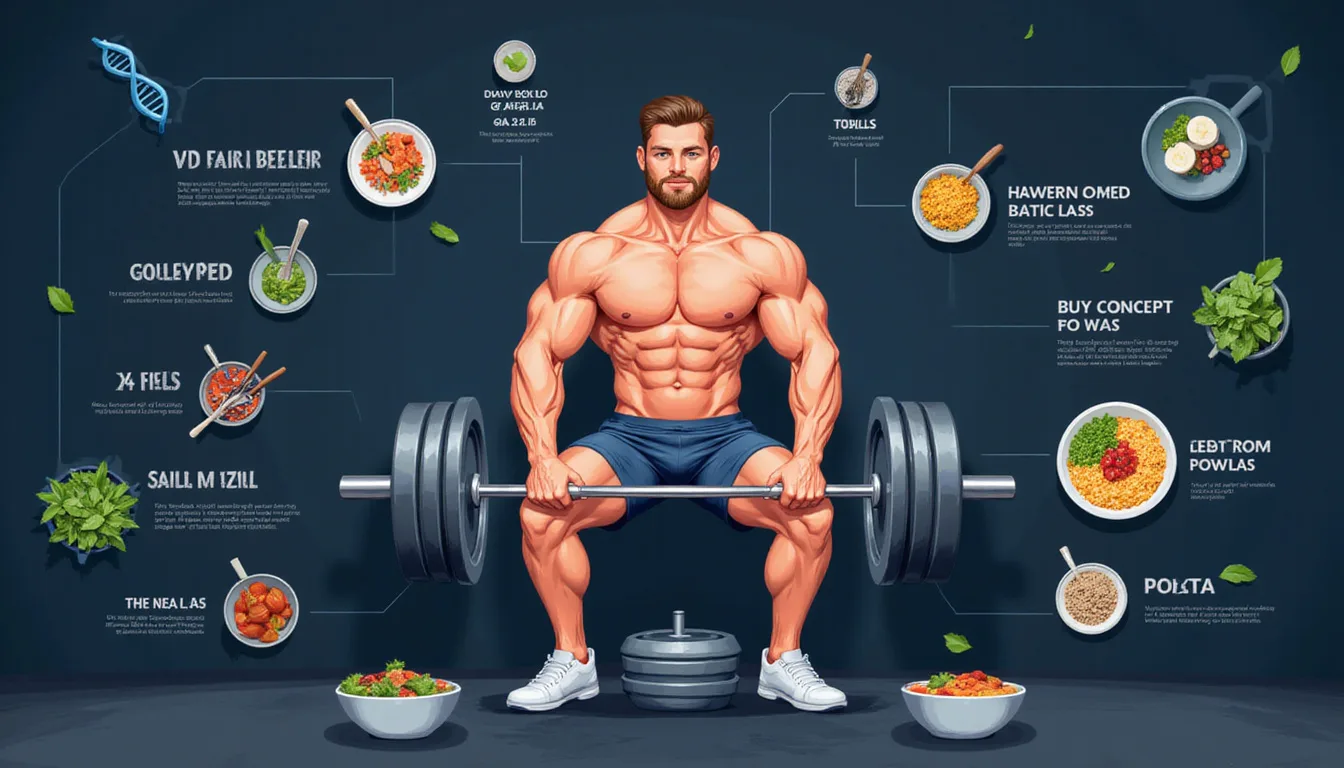
Achieving lean mass gain means you add muscle while keeping fat low. Many people eat too much, which adds fat, or too little, which stops muscle growth. A well-tested plan helps you build muscle step by step and keep your body tight.
Below is a complete, science-based guide to lean mass gain. It covers what to eat, how to train, how to recover, and how to check your progress so you stay on track.
What “lean mass gain” really means

“Lean mass gain” does not mean the scale only goes up. It means you:
- Increase muscle mass
- Keep fat growth low
- Boost strength, performance, and body shape
A typical “dirty bulk” adds 15–20 pounds in a few months, much of which is fat. A smart plan aims for slow, steady gains—usually:
- Around 0.25–0.5% of bodyweight per week for most lifters
- For a 150 lb person: about 0.4–0.8 lb per week
- For a 200 lb person: about 0.5–1.0 lb per week
This slower pace gives your body time to build muscle instead of just storing extra calories.
Step 1: Set your lean mass gain calorie target
Muscle growth needs a small calorie surplus. The goal is to add a few extra calories.
Estimate your maintenance calories
-
Multiply your bodyweight (in pounds) by:
- 13–14 if you sit most of the day
- 15–16 if you move moderately
- 17–18 if you move a lot
-
You can also use a trusted online calculator based on the Mifflin–St Jeor equation (source: National Institutes of Health).
This gives your maintenance calories. These are the calories you need to keep your weight steady.
Add a lean mass surplus
To gain lean mass, add:
- +200–300 calories per day for beginners or intermediates
- +100–200 calories per day for advanced lifters or those who gain fat easily
This should help you gain 0.25–0.5% of bodyweight each week.
For example (a moderately active, 180 lb person):
- Maintenance: 180 × 15 = 2700 kcal
- Lean gain target: 2700 + 250 ≈ 2950 kcal per day
Watch your weight for 2–3 weeks and then adjust:
- If the scale does not change, add about 100–150 kcal
- If you gain too fast, reduce about 100–150 kcal
Step 2: Dial in your macros for lean mass gain
In addition to calories, the protein, carb, and fat balance matters.
Protein: the base for lean mass gain
Protein builds muscle with amino acids.
- Aim for: 0.7–1.0 g of protein per pound of weight (1.6–2.2 g/kg)
- For 160 lb: 112–160 g protein per day
- For 200 lb: 140–200 g protein per day
Good protein sources include:
- Lean meats (chicken breast, turkey, lean beef, pork loin)
- Fish/seafood (salmon, tuna, cod, shrimp)
- Eggs and egg whites
- Greek yogurt, cottage cheese
- Protein powders made from dairy
- Plant proteins (tofu, tempeh, lentils, beans, edamame, seitan)
Carbs: fuel for effort and growth
Carbs support your workouts and help with recovery.
- Aim for: 1.5–2.5 g per pound of weight (3–5.5 g/kg)
- Focus on carbs right before and after exercise
Good choices include:
- Whole grains (oats, rice, quinoa, whole wheat bread)
- Potatoes and sweet potatoes
- Fruits (bananas, berries, apples, oranges)
- Legumes (beans, lentils, peas)
Fats: key for hormones and health
Fats help support your hormones, joints, and nutrient absorption.
- Aim for: 0.3–0.45 g per pound of weight (0.7–1.0 g/kg)
- Do not cut fat too low because it may harm hormones and energy
Good fat sources include:
- Avocado, olive oil, nuts, nut butters
- Fatty fish (salmon, mackerel, sardines)
- Seeds (chia, flax, pumpkin)
Step 3: Build a muscle-focused training plan
The food you eat helps your muscles grow, but your workouts push them to change. A clear plan stops extra calories from turning into fat.
Training ideas for lean mass gain
-
Use progressive overload
Increase weight, reps, sets, or challenge over time. Muscles grow when you push them more. -
Get enough volume
Most people do 10–20 hard sets per muscle group per week over 2–3 sessions. -
Start with compound lifts
Use moves that work many muscles at once:- Squats, deadlifts, lunges
- Bench press, overhead press, dips
- Pull-ups, rows, lat pulldowns
-
Train in rep ranges that build muscle
- 5–8 reps for strength
- 8–15 reps for muscle size
- Sometimes 15–20 reps for extra work
Do most sets until you feel 1–3 reps left in reserve.
A 4-day lean mass gain example
Day 1 – Upper (Push Focus)
- Bench Press: 4 sets of 6–8 reps
- Overhead Press: 3 sets of 8–10 reps
- Incline Dumbbell Press: 3 sets of 8–12 reps
- Lateral Raises: 3 sets of 12–15 reps
- Triceps Pushdowns: 3 sets of 10–15 reps
Day 2 – Lower (Quad Focus)
- Back or Front Squats: 4 sets of 6–8 reps
- Leg Press: 3 sets of 8–12 reps
- Bulgarian Split Squats: 3 sets of 8–10 reps per leg
- Leg Extensions: 3 sets of 12–15 reps
- Standing Calf Raises: 3 sets of 12–15 reps
Day 3 – Upper (Pull Focus)
- Pull-Ups or Lat Pulldowns: 4 sets of 6–10 reps
- Barbell or Dumbbell Rows: 3 sets of 8–10 reps
- Chest-Supported Rows: 3 sets of 10–12 reps
- Face Pulls: 3 sets of 12–15 reps
- Biceps Curls: 3 sets of 10–15 reps
Day 4 – Lower (Glute/Ham Focus)
- Deadlifts or Romanian Deadlifts: 4 sets of 5–8 reps
- Hip Thrusts: 3 sets of 8–10 reps
- Leg Curls: 3 sets of 10–12 reps
- Walking Lunges: 3 sets of 10–12 reps per leg
- Seated Calf Raises: 3 sets of 12–15 reps
Change exercises to suit your gear and level, but keep similar structure and volume.

Step 4: Optimize meal timing and workout nutrition
Your total food intake matters most, while meal timing can help make lean mass gain easier.
Pre-workout (60–120 minutes before)
Try to eat:
- 20–40 g protein
- 30–60 g carbs
- Low or moderate fat and fiber to avoid discomfort
Examples:
- Chicken and rice
- Greek yogurt with fruit and a little honey
- Protein shake, banana, and some oats
Post-workout (within 2 hours)
Focus on:
- 20–40 g high-quality protein
- 30–80 g carbs (depending on your workout)
Examples:
- Whey shake with fruit
- Lean meat with potatoes or rice
- Tuna on whole grain bread
Daily meal structure
Most people do well with:
- 3–4 main meals plus 1–2 protein snacks
- Spread protein evenly (about 25–40 g per meal)
This approach keeps amino acids available throughout the day for muscle work.
Step 5: Manage recovery, sleep, and stress
Muscle grows outside the gym when you rest.
Sleep: a must for lean mass gain
Aim for:
- 7–9 hours of good sleep each night
Poor sleep can hurt your workouts, boost hunger, and slow muscle repair. Keep sleep on track by:
- Setting a regular bedtime and wake time
- Reducing screen time and bright light before sleep
- Not eating heavy meals or too much caffeine late in the day
Stress and daily activity
High stress and low rest slow muscle gains even in a surplus.
- Keep your non-exercise movement at a healthy level, like walking.
- Use walks, breathing exercises, or light stretching to lower stress.
Step 6: Track progress and adjust smartly
To check your lean mass gain, use clear data.
Weekly metrics
- Scale weight
Weigh yourself 3–7 mornings per week (after using the bathroom and before eating) and average the results. - Strength in key lifts
Write down reps, sets, and weights. Watch if you improve week by week. - Body measurements
Measure waist (at the navel), chest, hips, arms, and thighs. - Photos
Take pictures with the same light and time every 2–4 weeks.
Reading the changes
After 4–6 weeks, if you see:
- Weight up, strength up, and the waist the same or just a bit higher → You are likely adding muscle with little fat.
- A fast weight gain and a larger waist → Your surplus may be too high. Consider lowering your calories by about 100–200 kcal.
- Little change in weight and stalled strength → Your surplus may be too low. Try adding about 100–150 kcal per day.
Lean mass gain takes time. Focus on trends over months instead of daily changes.
Clean eating vs. flexible eating for lean mass gain
You do not need a perfect “clean” diet to gain lean mass. The quality of food does count.
Focus on nutrient-dense, less processed foods
Allow 80–90% of your calories from:
- Lean proteins
- Whole grains
- Fruits and vegetables
- Healthy fats
This food mix helps with recovery, gym performance, and overall body health.
Keep room for variety
The other 10–20% of calories can include:
- Your favorite snacks or desserts
- Occasional meals out
This mix makes your lean mass gain plan one you can keep over time.
Common mistakes that stop lean mass gain
Watch for these mistakes to keep your gains lean and steady.
-
Bulking with too many extra calories
Huge surpluses (for example, +800–1,000 kcal) often add more fat than muscle. -
Underestimating your intake
Not tracking food can lead to an accidental deficit or too many extra calories. -
Missing enough protein
Getting enough calories but not enough protein will hold back muscle growth. -
Training without progress
Using the same weight, sets, and reps each week will slow gains, even with good nutrition. -
Skipping recovery
Overtraining and low sleep can make muscle building harder. -
Switching programs too quickly
Use a good routine for at least 8–12 weeks before you change much.
Sample day of eating for lean mass gain (approx. 2,900 kcal)
For a 175–185 lb moderately active lifter aiming for lean mass gain:
Meal 1 – Breakfast
- 3 whole eggs and 2 egg whites
- 1 cup cooked oats with berries and a little honey
- 1 tablespoon almond butter
Meal 2 – Snack
- 1 cup Greek yogurt
- 1 banana
Meal 3 – Pre-workout lunch
- 6 oz cooked chicken breast
- 1.5 cups cooked rice
- 1 cup mixed vegetables
- 1 teaspoon olive oil on vegetables
Meal 4 – Post-workout
- A whey protein shake (30–35 g protein)
- 1 large apple
Meal 5 – Dinner
- 6 oz salmon
- 8 oz roasted potatoes
- A large mixed salad with olive oil and vinegar
Change portions and foods to suit you, but hold to a similar balance of macros and calories.
FAQs about lean mass gain
-
How long does lean muscle gain take to show?
Noticeable changes usually appear in 8–12 weeks if you eat a small surplus, reach your protein goal, and use a progressive strength program. Beginners might see changes faster, while advanced lifters may need more time. -
What is a good macro ratio for lean muscle gain?
A good start can be:
- Protein: 25–30% of total calories
- Fats: 20–30% of total calories
- Carbs: 40–55% of total calories
Then adjust by how you feel, perform, digest food, and see changes in bodyweight and strength.
- Can you gain lean mass and lose fat at once?
It is possible to build muscle and lose fat together if you are a beginner, if you restart after a break, or if you have higher body fat. In these cases, a small deficit or a steady intake paired with high protein and progressive training may improve body shape. Experienced lifters may find it better to work on one goal at a time.
Turn this lean mass gain plan into action
You now have a complete, science-tested plan for lean mass gain. It includes a careful calorie surplus, the right macros, a clear training routine, and a system to check and adjust progress. The key to changing your body lies in steady, consistent work over months.
Start today by:
- Calculating your maintenance calories and adding a small surplus.
- Planning your weekly training with gradual increases.
- Setting up 3–5 go-to meals that meet your protein and calorie needs.
- Recording your weight, workouts, and measurements for the next 4–6 weeks.
If you need help turning this plan into your own custom guide—one with calories, macros, and training made for your routine—ask for a personal lean mass gain blueprint.
[center]Always consult with your doctor prior to making drastic diet changes.[/center]
[center]As an Amazon Affiliate, Savvy Keto makes a small commision (at no extra cost to you) on any purchases you make thru affiliated links you click on.[/center]