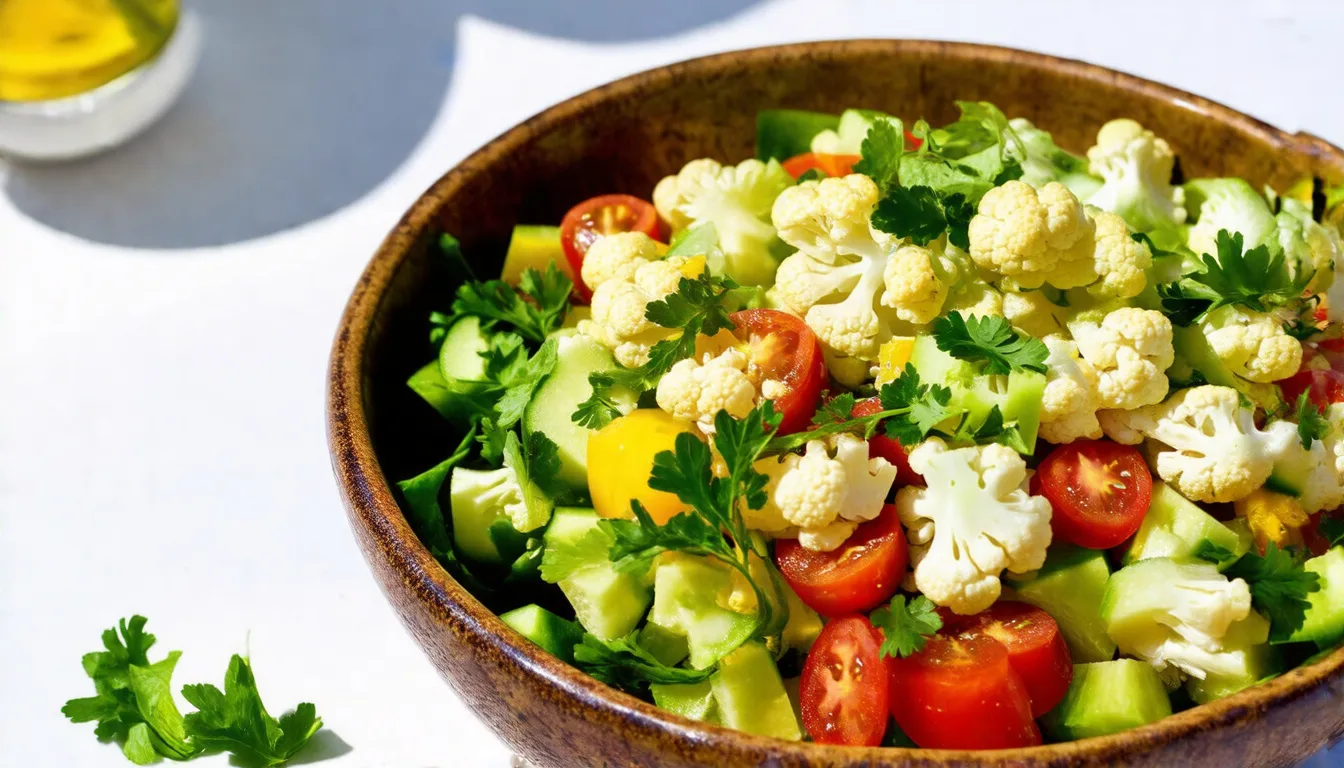
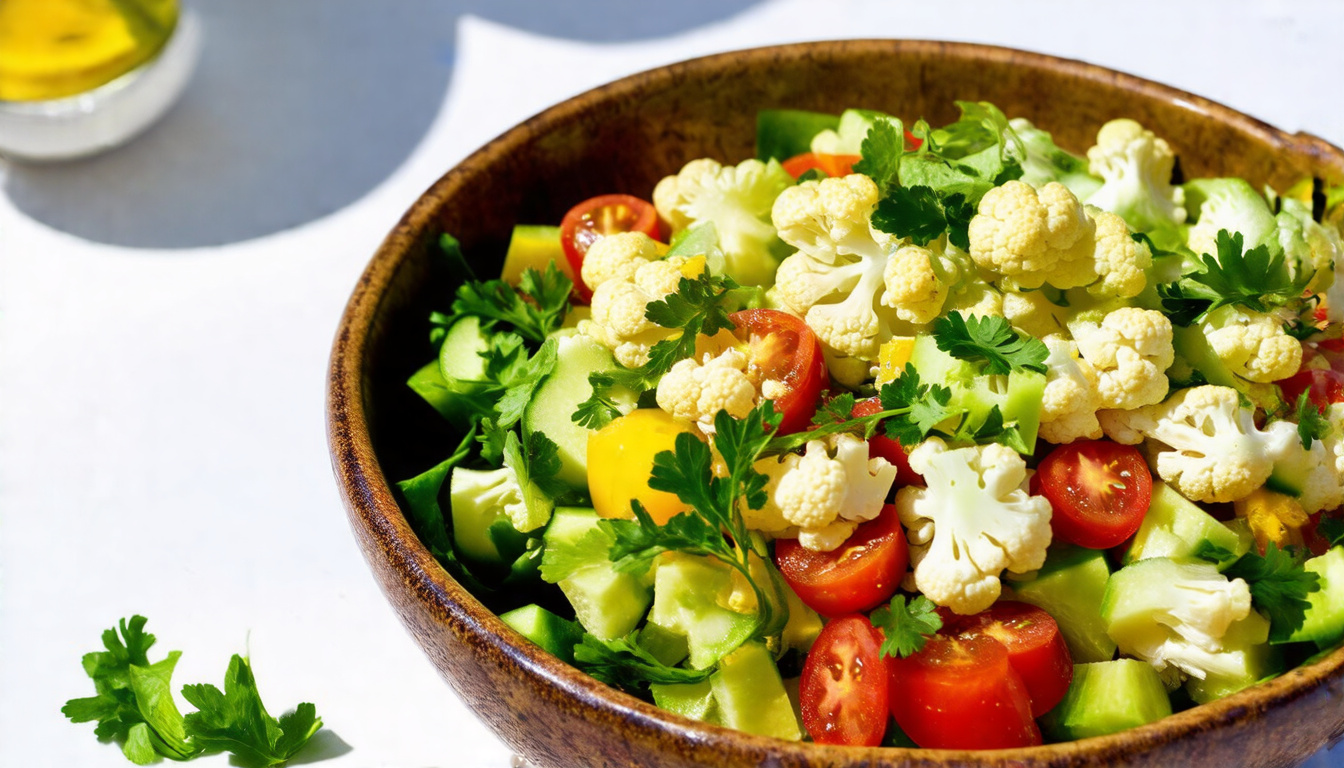
Discover a bright, low-carb take on the beloved Middle Eastern salad with this Cauliflower tabbouleh. Using finely riced cauliflower instead of bulgur keeps the fresh herb-forward flavors intact while cutting carbohydrates—making it perfect for keto, low-carb, or anyone wanting a lighter side. This version is crisp, tangy, and ready in about 15 minutes.

Why Cauliflower tabbouleh works
- Keeps the traditional parsley, mint, tomato, lemon, and olive oil profile.
- Replaces grains with riced cauliflower to reduce net carbs.
- Easy to customize (add feta or avocado if desired) and makes a vibrant side or light main.
Quick facts
- Yield: 4 servings
- Prep time: 15 minutes
- Cook time: 0 minutes (cauliflower is served raw or lightly tossed)
- Keyword: Cauliflower tabbouleh
Ingredients
- 4 cups riced cauliflower (about 440 g; from 1 medium head)
- 1 cup finely chopped fresh flat-leaf parsley (about 60 g)
- 1/4–1/2 cup finely chopped fresh mint (about 15 g), more or less to taste
- 1 medium cucumber, seeded and diced (about 200 g)
- 1 medium tomato, seeded and diced (about 120 g)
- 3 scallions (green onions), thinly sliced (about 45 g)
- 3 tablespoons fresh lemon juice (about 45 g)
- 3 tablespoons extra-virgin olive oil
- Salt and freshly ground black pepper, to taste
- Optional: 1/2 avocado diced or 1/4 cup crumbled feta for serving
- Optional: pinch of ground sumac or a squeeze of lemon for garnish
Instructions
- Rice the cauliflower: Pulse cauliflower florets in a food processor until rice-sized. You can also buy pre-riced cauliflower.
- Combine vegetables and herbs: In a large bowl, mix riced cauliflower, parsley, mint, cucumber, tomato, and scallions.
- Dress and season: Whisk lemon juice, olive oil, salt, and pepper; pour over the cauliflower-herb mixture. Toss thoroughly.
- Taste and adjust: Add more lemon, salt, or mint as desired. If using, gently fold in avocado or feta just before serving.
- Chill briefly (10–20 minutes) for flavors to meld, then serve.
Serving suggestions
- Serve on a bed of mixed greens, as a side for grilled fish or chicken, or spoon into lettuce leaves as a wrap.
- Add a spoonful of Greek yogurt or labneh for creaminess without many extra carbs.
Keto/Low-Carb Nutritional Information (estimated)
Note: Nutrition is approximate and will vary by ingredient brand, size, and preparation. Sugar alcohols are negligible in whole vegetables—0 g is assumed.
Recipe total (entire bowl)
- Calories: ~571 kcal
- Total fat: ~43 g
- Total carbohydrate: ~46 g
- Dietary fiber: ~15 g
- Sugar alcohols: 0 g
- Net carbs: ~31 g
- Protein: ~14 g
Per serving (recipe divided into 4 servings)
- Calories: ~143 kcal
- Total fat: ~10.8 g
- Total carbohydrate: ~11.5 g
- Dietary fiber: ~3.7 g
- Sugar alcohols: 0 g
- Net carbs: ~7.8 g
- Protein: ~3.5 g
Why net carbs matter for keto
For most low-carb and ketogenic diets, net carbs (total carbs minus fiber and sugar alcohols) are what impact blood glucose and ketosis. At roughly 7.8 g net carbs per serving, Cauliflower tabbouleh is a keto-friendly side or salad that fits easily into most daily carb allowances.
Tips and variations
- For faster prep: buy pre-riced cauliflower and pre-chopped herbs.
- Make it more filling: add grilled chicken, shrimp, or 1/2 avocado (note: avocado will add fat and 2–3 g net carbs depending on size).
- Add crunch: stir in 1–2 tablespoons toasted pine nuts or chopped almonds (adjust carb counts).
- Storage: Keeps well in an airtight container in the fridge for 2–3 days. Parsley will brown over time—best fresh.
Final note
Cauliflower tabbouleh offers the bright, herbaceous flavors of traditional tabbouleh with a fraction of the carbohydrates. It’s an excellent choice when you want a light, refreshing salad that supports keto and low-carb goals without sacrificing taste.
If you’d like, I can provide a printable recipe card, a grocery list, or a variation scaled for meal prep (8 servings) with updated nutrition. Which would you prefer?