If you have cut out all carbs and then feel tired, grumpy, and stuck at a weight-loss plateau, you are not the only one.
Smart carbs do more work than cutting out carbs completely.
By choosing and timing the right carbohydrates, you can eat more, burn more fat, and keep your energy steady all day without feeling like you are missing out.
This guide shows what smart carbs are, how they work in your body, and how you can put them into your daily routine for better health, weight management, and performance.
What Are Smart Carbs?

Smart carbs are foods that provide carbohydrates in a strong, natural form. They are:
• Rich in vitamins, minerals, and plant compounds
• High in fiber or resistant starch
• Slower to digest and absorb
• Less likely to make your blood sugar jump
They work in a way that is very different from empty carbs like soda, candy, pastries, or very processed white flour. Empty carbs give a fast sugar surge that fades quickly.
Types of Smart Carbs
Smart carbs often come from these groups:
• Whole, barely processed grains: oats, quinoa, brown or wild rice, barley, buckwheat, whole-grain bread, and pasta
• Starchy vegetables: sweet potatoes, winter squash, corn, peas, beets, potatoes (especially when cooled), and carrots
• Legumes: lentils, chickpeas, black beans, kidney beans, and edamame
• Lower-sugar fruits: berries, apples, pears, oranges, kiwi, and grapefruit
• High-fiber foods: all kinds of vegetables and seeds like chia and flax
When the plant’s fiber and cell walls stay whole, the carbohydrates are broken down slowly. This slow break-up keeps the rise in blood sugar gentle.
How Smart Carbs Help Burn Fat
It may seem odd to eat more carbs to burn more fat.
When used right, smart carbs can support fat loss in a few important ways.
1. Improved Blood Sugar and Insulin Responses
Refined carbohydrates like white bread and sugary snacks break down quickly.
They flood your blood with sugar and send a strong insulin signal.
These signals can make your body store fat, trigger cravings, and cause energy dips.
Smart carbs take longer to digest. They also come with fiber, water, and sometimes protein.
This slows the sugar rise, lowers the amount of insulin released, and gives your body time to use stored fat as fuel.
Over time, this may help your body work better with insulin and make weight loss or weight control easier (source: Harvard T.H. Chan School of Public Health).
2. More Fullness and Fewer Cravings
High-fiber smart carbs help you feel full.
Fiber soaks up water and swells in your stomach.
It sends a slow stream of nutrients that tells your brain you do not need more food.
This slow release of sugar stops the spike-and-crash cycle and helps you avoid cravings.
3. More Food Volume Without Extra Calories
Smart carbs are low in calories compared to how full they make you feel.
Think of it this way:
• 200 calories in chips may vanish quickly.
• 200 calories in baked potato and broccoli sit on your plate and take time to eat.
When you choose smart carbs, you eat more food by volume.
Meals feel better in both mind and body.
When you feel full with smart carbs, you are less likely to overeat.
In the end, the best diet is one that you can stick with every day.
Smart carbs help you do just that.
How Smart Carbs Boost Energy Without a Crash
Your body and brain run on carbohydrates.
Cutting carbs too much can lead to brain fog, mood swings, weak workouts, and sleep trouble.
Smart carbs help you in three ways:
- Fuel for workouts:
Complex carbs stored as muscle fuel power strength, cardio, and high-intensity sessions. - Support for brain work:
Your brain needs steady sugar. Too little can lower focus and change mood. - Stable energy:
Smart carbs break down slowly, so you get a steady flow of fuel instead of quick highs and lows.
Pair smart carbs with protein and healthy fats to build meals that keep you going for hours.

Smart Carbs vs. “Bad” Carbs
Not all carbs are the same, and quality counts. Here is a simple look.
Smart carbs are:
• Foods close to their natural state
• Packed with natural fiber
• Rich in vitamins, minerals, or antioxidants
• Giving a lower to moderate effect on blood sugar
• Helping you feel full and fueled
Less-smart carbs are:
• Highly refined or made with many extra ingredients
• Low in natural fiber
• Mixed with added sugar and unhealthy fats
• Quick to raise blood sugar
• Easy to overeat with little feeling of fullness
You do not need to lose these foods for good.
They can be a part of your diet sometimes, but they should not be the main source of your carbohydrates.
Best Smart Carbs to Eat Every Day
Use this list as a guide to build your meals around smart carbs.
Whole Grains
• Oats (either old-fashioned or steel-cut)
• Quinoa
• Brown or wild rice
• Barley, farro, and buckwheat
• 100% whole-grain bread or pasta
Look for labels that start with “100% whole grain” or the name of a whole grain.
Starchy Vegetables
• Sweet potatoes
• White potatoes (boiled, cooled, or roasted with their skins)
• Squash like butternut, acorn, or kabocha
• Corn and green peas
• Beets and carrots
These work well as a side or mixed in salads, soups, or bowls.
Legumes
• Lentils (in many colors)
• Chickpeas
• Black, pinto, and kidney beans
• Cannellini and navy beans
• Edamame
Legumes give you smart carbs, plant protein, and fiber all in one.
Fruits
• Berries like strawberries, blueberries, raspberries, and blackberries
• Apples and pears (with skin)
• Citrus fruits like oranges, grapefruit, and clementines
• Kiwi, plums, peaches, and nectarines
Fruits come in ready portions, making them great for snacks or dessert.
Non-Starchy Vegetables
While they have fewer carbs, non-starchy vegetables are key to a smart carb plan:
• Leafy greens: spinach, kale, arugula, or romaine
• Veggies like broccoli, cauliflower, Brussels sprouts, or cabbage
• Peppers, onions, mushrooms, zucchini, tomatoes, and cucumbers
They add body, fiber, and valuable vitamins with few calories.
How Many Smart Carbs Should You Eat?
The right amount of smart carbs for you depends on:
• Your body size and makeup
• How active you are
• Your goals (weight loss, steady weight, muscle gain, or performance)
• Any health needs (like diabetes, PCOS, or thyroid issues)
General Guidance
For many active adults:
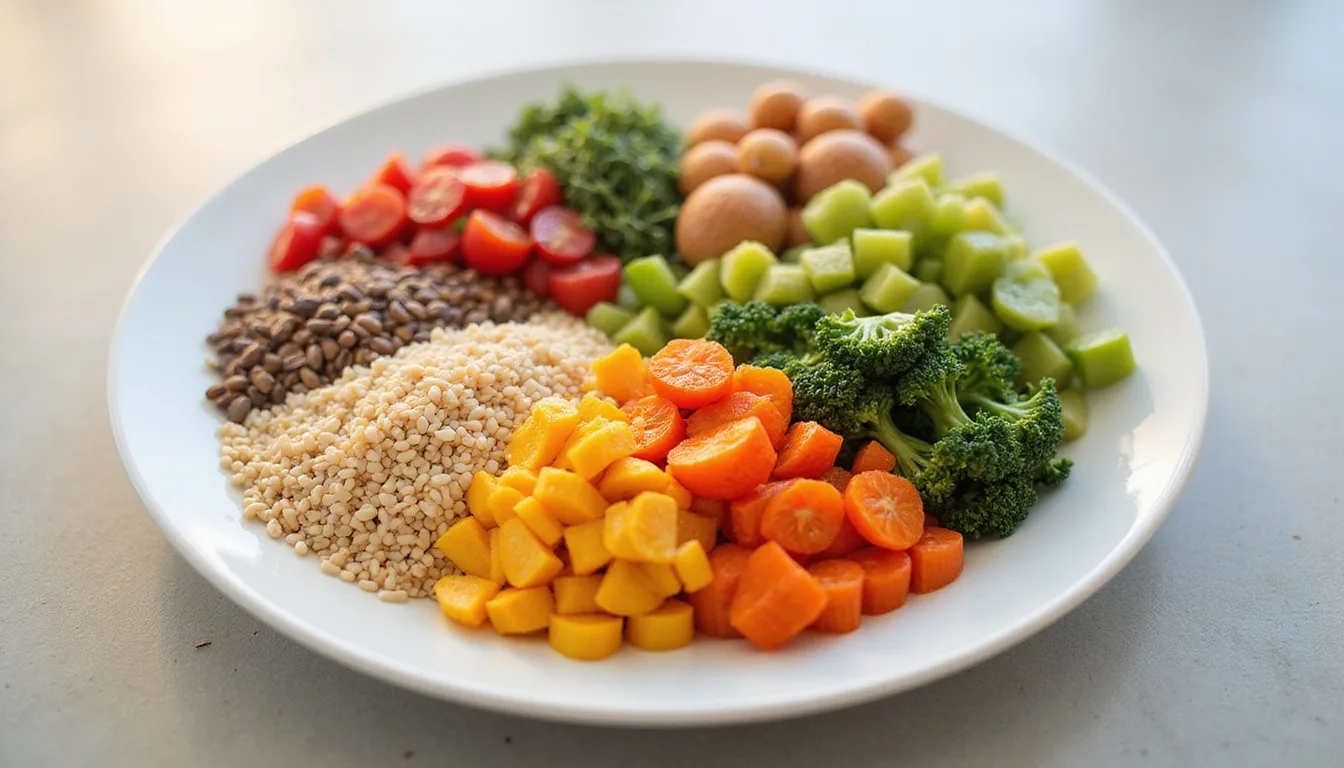
• At each main meal, fill your plate:
– About ¼ to ⅓ with smart carbs
– About ⅓ to ½ with non-starchy vegetables
– About ¼ with lean protein
– And add 1–2 thumb-sized portions of healthy fats (olive oil, nuts, or avocado)
For fat loss, keep smart carbs to roughly ¼ of your plate.
For muscle gain or performance, you might use ⅓ to ½ of your plate with smart carbs, especially near your workouts.
Listen to your body:
• If you feel tired or your workout suffers, you might need more carbs.
• If you feel overly full or gain weight, you might cut back a bit.
When to Eat Smart Carbs
The timing of smart carbs can boost their benefits for burning fat and keeping energy.
1. Around Workouts
• 1–3 hours before exercise, eat a smart carb like oatmeal, a banana, brown rice, or a sweet potato along with some protein.
• Within 2 hours after exercise, eat smart carbs with protein to restore your muscle fuel and support recovery.
At these times, your body is better at using carbs for energy and repair instead of storing them.
2. Early in the Day
Many people find that eating most of their smart carbs in the morning and midday:
• Keeps energy levels steady
• Cuts down cravings in the evening
• Helps you sleep better, as you do not eat heavily just before bed
For instance:
• Breakfast: Oats with berries
• Lunch: A bowl with quinoa and beans
• Dinner: Mostly protein and vegetables with a bit of smart carbs
Some people do fine with carbs at night, especially if they work out late. Choose what suits you best and adjust as needed.
Building Smart Carb Meals: Simple Templates
Below are a few meal ideas where smart carbs form the backbone of balanced, fat-burning dishes.
Breakfast Ideas
• Protein oats bowl:
– Cook rolled oats with milk or a milk substitute
– Stir in protein powder or Greek yogurt
– Top with berries, chia seeds, and a few nuts
• Veggie omelet with a smart carb side:
– Make an omelet with 2–3 eggs or egg whites, adding spinach, peppers, and onions
– Serve with half a sweet potato or a slice of whole-grain toast
Lunch Ideas
• Power grain bowl:
– Use quinoa, brown rice, or farro as a base
– Add grilled chicken, tofu, or beans
– Mix in roasted vegetables and leafy greens
– Drizzle with olive oil and lemon or a light vinaigrette
• Smart carb salad:
– Start with a large bowl of mixed greens and raw vegetables
– Add about ½ cup of lentils or chickpeas
– Top with tuna, salmon, or grilled tempeh
– Sprinkle some seeds for healthy fats
Dinner Ideas
• Oven-roasted meal:
– Roast chicken or salmon with sweet potatoes and Brussels sprouts
– Use olive oil, herbs, and spices for flavor
• Stir-fry on a smart carb base:
– Stir-fry lean beef, chicken, shrimp, or tofu
– Load plenty of mixed vegetables
– Serve the stir-fry over a small portion of brown rice, barley, or buckwheat noodles
Snack Ideas
• Apple or pear with one spoonful of nut butter
• Carrot sticks paired with hummus
• Greek yogurt mixed with berries and a spoonful of oats
• A small handful of nuts along with a piece of fruit
Smart Carbs for Different Goals and Lifestyles
For Weight Loss
• Start with legumes, vegetables, and whole fruits because they fill you up and are lower in calories.
• Use whole grains and starchy vegetables in moderate portions (about ½ to 1 cup cooked per meal).
• Pair smart carbs with protein and some fat to keep hunger in check.
For Muscle Gain and Active Lifestyles
• Use larger portions of oats, rice, potatoes, and whole-grain pasta.
• Include smart carbs both before and after exercise to support energy and recovery.
• Do not worry about eating more carbs if you train hard—they help you perform better.
For Diabetes or Insulin Issues
• Choose smart carbs that have a low or moderate effect on blood sugar.
• Beans, lentils, non-starchy vegetables, berries, and whole grains are good choices.
• Watch your portions and combine smart carbs with protein, fat, and fiber so that your blood sugar stays stable.
• It is best to work with a healthcare provider to set the perfect amounts for you.
Common Mistakes When Switching to Smart Carbs
Watch out for these pitfalls:
-
“Health halo” overeating
Even whole-grain cookies or granola can be high in calories. Keep an eye on how much you eat. -
Hidden sugars
Flavored yogurt, cereal, sauces, or snack bars may hide added sugars. Check the labels. -
Too little protein or fat
Smart carbs work well when they are part of a meal that includes enough protein and healthy fats.
They work best together. -
Not drinking enough water
Fiber needs water. When you add more high-fiber smart carbs, drink more water to avoid discomfort. -
Changing all at once
Swap one or two items at a time (for example, white rice for brown rice or sugary cereal for oats).
Small changes can stick better.
Quick Checklist: Are Your Carbs Smart?
Use this list when you plan a meal or shop:
• Does this food show natural fiber (like visible skin, hull, or intact grains)?
• Is it close to its natural form (for example, whole fruit rather than juice)?
• Does it have vitamins, minerals, or antioxidants?
• Is it made with few ingredients, with familiar words on the label?
• Will it keep you full for at least 2 to 3 hours when eaten with protein and fat?
If most answers are yes, you are likely choosing a smart carb.
FAQ About Smart Carbs
-
What are some smart carbohydrates for weight loss?
Examples include oats, quinoa, brown rice, lentils, chickpeas, black beans, sweet potatoes, and whole fruits like berries and apples.
They offer high fiber, filling nutrients, and a gentle effect on blood sugar. -
Are smart carbs better than a low-carb diet for burning fat?
For many, smart carbs are easier to live with than very low-carb or keto plans.
A focus on high-fiber, nutrient-rich carbs in proper portions may help burn fat while keeping your energy, mood, and performance strong.
Some people may do well with fewer carbs, so choose what fits your life. -
Can smart carbs help keep my energy and focus steady?
Yes.
Smart carbs work by giving you a slow and steady release of sugar rather than a fast spike and crash.
With protein and healthy fats, foods like oats, beans, whole grains, and fruit can support your brain and body for hours.
Start Eating Smart Carbs Today
Do not fear carbohydrates or cut them out completely if you want to lose weight and feel good.
Switch to smart carbs—the high-fiber, nutrient-rich foods your body needs.
You can eat satisfying meals, burn more fat, protect muscle, and keep steady energy all day.
Watch your long-term health, not just quick results.
Start with one simple change: swap a refined carb like white bread, sugary cereal, dessert, or soda for a smart carb such as oats, beans, whole fruit, or a baked potato with its skin.
Make small changes at each meal and build a healthier routine week by week.
If you are ready to feel better, control your energy, and manage your weight without extreme diets, plan each plate with protein, vegetables, and smart carbs.
Feel the difference in just a few days.
[center]Always consult with your doctor prior to making drastic diet changes.[/center]
[center]As an Amazon Affiliate, Savvy Keto makes a small commision (at no extra cost to you) on any purchases you make thru affiliated links you click on.[/center]