Weight Loss Macros That Melt Fat: Easy Meal Rules for Results
You tried eating healthy and the scale did not move. You are not the only one. The missing piece is how much protein, carbs, and fat your body needs. When you know a few simple macro rules, you build meals that burn fat while keeping energy and muscle.
This guide explains macros in plain words. It gives you clear meal rules so you see results without counting every bite.
What Are Macros, Really?

“Macros” stand for macronutrients. These are the three main nutrients that give calories:
- Protein – 4 calories per gram
- Carbohydrates – 4 calories per gram
- Fats – 9 calories per gram
Each macro has a different role:
- Protein: Keeps muscle, fills you up, and boosts calorie burn during digestion.
- Carbs: Fuel the brain and high-intensity effort. They help keep energy steady and control cravings.
- Fats: Help hormones, brain work, and vitamin absorption. They hold many calories.
Your weight loss macros are the amounts of each macro you eat per day while you burn more than you eat. This makes your body use stored fat for fuel.
Step 1: Set Your Calorie Target First
No macro plan works if you eat too many calories.
A quick way to set a fat-loss calorie range
-
Multiply your body weight (in pounds) by:
- 10–11 if you are mostly still
- 11–12 if you are lightly active
- 12–13 if you work hard
-
Pick a number in that range as your daily calorie target.
Example
A 170‑lb lightly active person:
- 170 × 11 = 1,870
- 170 × 12 = 2,040
A good start might be about 1,950 calories a day.
After that, you put your macros within that calorie limit.
Step 2: Set Your Protein Macro (Non‑Negotiable)
For weight loss, protein is the key macro. It helps to:
- Keep you full between meals
- Save or build muscle in a calorie deficit
- Boost your calorie burn through digestion
Aim for:
0.7–1.0 grams of protein per pound of goal body weight
Use your goal weight instead of your current weight if you are far from your target.
Example
If you want to be 150 lb and eat 1,900 calories per day:
- Protein target: 0.8 × 150 = 120 g
- Calories from this protein: 120 g × 4 = 480 calories
Then, 1,900 − 480 = 1,420 calories remain for carbs and fats.
Step 3: Set Your Fat Macro (Hormone-Friendly, Not Too Low)
Too little fat may upset hormones, mood, and hunger. Too much fat may slow fat loss because fat has many calories.
A simple fat rule for fat loss
Aim for:
0.3–0.5 grams of fat per pound of goal body weight
- Use the lower value if you want more carbs
- Use the higher value if you opt for higher fat and less carbs
Example (for 150‑lb goal)
0.4 × 150 = 60 g fat
- Calories from fat: 60 × 9 = 540 calories
- So far:
- 480 kcal (protein)
- 540 kcal (fat)
- Total = 1,020 kcal
Calories left for carbs: 1,900 − 1,020 = 880 calories
Carbs grams: 880 ÷ 4 = 220 g carbs
Final macro setup example
- Protein: 120 g
- Fat: 60 g
- Carbs: 220 g
- Calories: ~1,900
This is your starting blueprint. You can adjust it as you notice changes in feel, energy, and progress.
Step 4: Carb Macros – The Dial You Adjust
After setting protein and fat, let carbs fill the extra calories.
For most, a moderate-carb plan fits best:
- It gives enough for workouts and focus
- It is low enough to keep you in a calorie deficit and help control hunger
You can shift carbs higher or lower based on:
- How hard you train (more training means more carbs)
- What you prefer (some feel best with more fat and less carbs)
- Health matters (such as concerns with insulin, when guided by a professional)
There is no fixed carb number. The key is that carbs become the dial to change calories while protein and fat stay steady.
Easy Macro Ratios That Work for Most People
If detailed math feels heavy, start with a percentage-based setup.
General fat-loss-friendly macro splits
- Balanced approach: 30% protein / 35% carbs / 35% fat
- Higher carb (for intense training): 25% protein / 45% carbs / 30% fat
- Higher fat (for lower-carb choices): 30% protein / 25% carbs / 45% fat
Then, adjust based on:
- Hunger and cravings
- Gym work
- Scale numbers and body measurements
Turn Macros Into Easy Meal Rules (No Calculator Needed)
You do not have to weigh every bit of food to use weight loss macros. Use visual and clear rules:
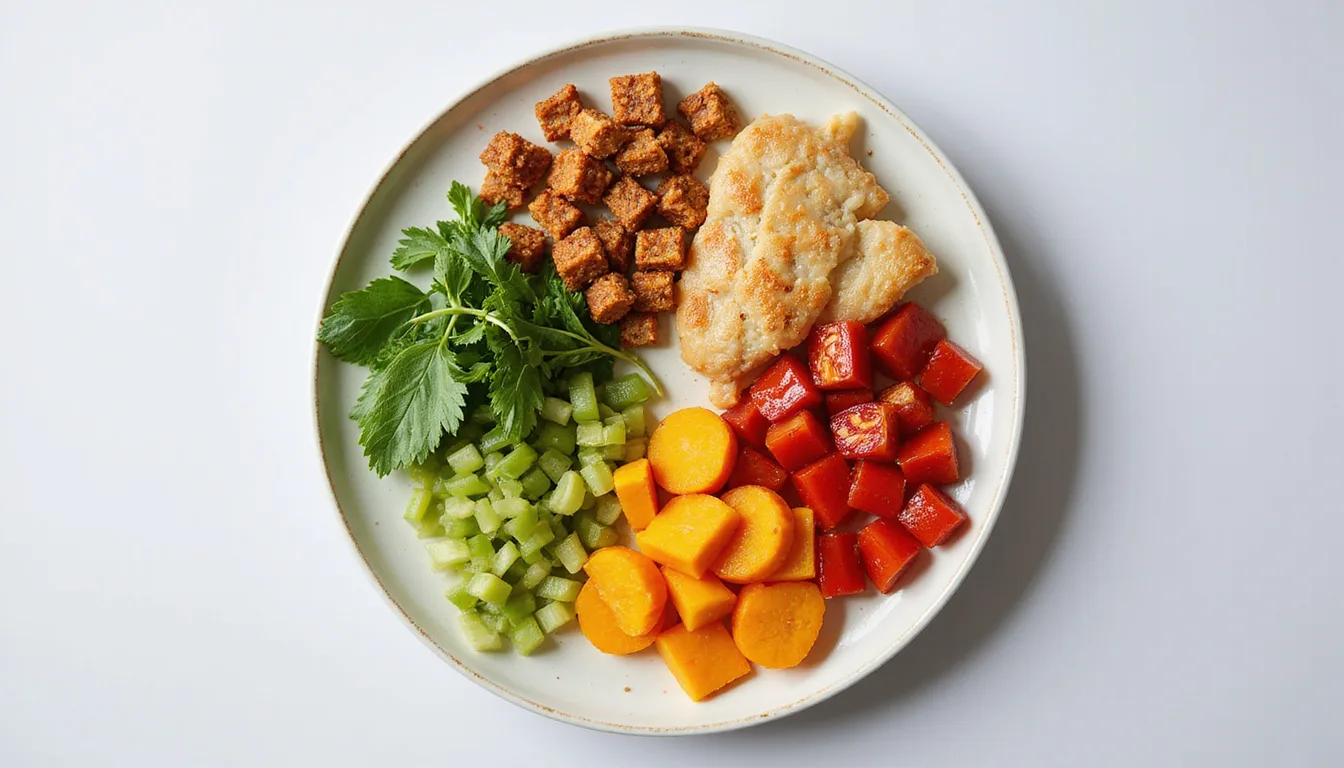
The “3–2–1 plate” for fat loss
For most meals:
- 3:
- 1–2 palm-sized pieces of protein
- 2:
- 1–2 fist-sized helpings of vegetables
- 1:
- 1 cupped-hand share of carbs (2 near workouts)
- 1 thumb of healthy fats (or fat in your protein)
In practice:
-
Breakfast:
- 2 whole eggs + 3 egg whites (protein + fat)
- 1 slice whole-grain toast (carb)
- A small handful of spinach or tomatoes (veg)
-
Lunch:
- A palm-sized piece of chicken breast
- A fist of mixed veggies
- A cupped hand of quinoa or rice
- One thumb of olive oil or avocado
-
Dinner:
- A palm of lean beef or tofu
- 2 fists of vegetables
- A small cupped-hand of potatoes or beans
- Little extra fat if the protein is already fatty
Over the day, these plate rules will give you a macro plan that helps fat loss.
Sample Day of Weight Loss Macro Meals (Approx. 1,900 Calories)
This example shows roughly:
Protein 120 g / Carbs 200–220 g / Fat 60–65 g
Breakfast (400–450 kcal)
- Plain, nonfat Greek yogurt (1.5 cups)
- 1/3 cup berries
- 1–2 tbsp chopped nuts
- 1 tbsp chia seeds
This meal is high in protein, has moderate carbs and fat, and gives fiber.
Snack (200 kcal)
- A protein shake (25 g protein) mixed with water or unsweetened almond milk
- 1 small apple
Lunch (500 kcal)
- 4–5 oz grilled chicken breast
- 1 cup cooked brown rice
- 1.5 cups steamed broccoli
- 1 tsp butter or olive oil
Snack (150–200 kcal)
- 1 string cheese or 2 oz cottage cheese
- A small handful of baby carrots
Dinner (550–600 kcal)
- 4–5 oz salmon or tofu
- 1 medium baked potato or ¾ cup cooked lentils
- 2 cups mixed salad greens
- 1 tbsp olive oil with vinegar
This plan spreads protein through the day with fiber and vegetables in most meals, and it fits a practical eating style.
How to Track Weight Loss Macros (Without Losing Your Mind)
You have options:
1. Full tracking (good for data fans)
Use an app (MyFitnessPal, Cronometer, Lose It, etc.):
- Log all you eat for 1–2 weeks
- Weigh important items like meat, grains, and oils at the start
- Compare your logs with your targets
Pros: high accuracy, better awareness.
Cons: takes time and may feel strict.
2. Partial tracking (a balanced middle)
- Track protein and total calories each day
- Let carbs and fats be less exact as long as protein is met and calories stay in range
This is enough for steady progress.
3. Plate method (low tracking)
- Use hand-sized portions and the “3–2–1 plate” rule
- Weigh yourself and check measurements weekly to see progress
- Only track details if you hit a pause after a few weeks
Choose the method you can stick to for many months, not just days.
How Quickly Should Fat Loss Happen?
A healthy, steady loss is usually:
- 0.5–1.0% of body weight per week
For example, if you weigh 180 lb:
- Aim for 0.9–1.8 lb per week
You may lose more weight at first (which may be water), but keeping to this range helps save muscle and balance.
If you find that:
- You lose more than 1.5% per week and feel weak → raise calories a bit
- You lose less than 0.5% per week → lower calories by 150–200 or add light activity
Common Macro Mistakes That Stall Fat Loss
Even with a solid plan, some common habits slow progress.
1. Missing “hidden” calories
Oils and dressings (1 tbsp olive oil = ~120 calories)
- Sugary drinks, creamers, and alcohol
- Snacks like nut butters and nuts—good but very calorie heavy
Tip: measure fats and liquids especially at first.
2. Not eating enough protein
If you feel hungry and lose strength, you may need more protein. Add 10–20 g more per day by having:
- An extra ½ serving of lean meat, fish, tofu, or Greek yogurt
- A protein shake after exercise
3. Weekend “macro amnesia”
Eating well five days and off on two days can cancel your deficit.
You do not need perfection—just a steady routine:
- Plan extra calories for foods like pizza or dessert once or twice a week
- Keep protein high and avoid an all-or-nothing approach
4. Changing plans too often
If you switch methods constantly, you will not see results. Stick with one system for at least 3–4 weeks before deciding on a major change, unless you feel unwell.
Matching Your Macros to Your Lifestyle
Your weight loss macros need to fit with your real life.
If you train early in the morning
- Keep dinner light in carbs and fat the night before
- Have a small carb-plus-protein snack before training (for example, a banana with whey)
- Put more carbs at breakfast and lunch
If you sit most of the day
- Focus on protein and vegetables in most meals
- Keep carb portions small except around workout times
- Use walking breaks and short movement sessions to add a few calories burned
If you are plant-based
- Combine plant proteins such as tofu, tempeh, lentils, beans, edamame, seitan, or high-protein plant yogurts
- Consider protein powder to reach daily targets with ease
- Watch fatty plant foods (nuts, seeds, oils) so that calories do not add up too fast
Troubleshooting: What If You’re Hitting Macros but Not Losing?
If the scale does not change for 2–3 weeks:
-
Check that you log accurately
- Weigh oils, nut butters, and calorie-dense foods
- Include all small bites, sips, and samples
-
Recalculate your calorie needs
As you lose weight, your maintenance calories drop.- Lower your intake by 100–150 calories per day. Reassess in 2 weeks.
-
Look at changes beyond the scale
- Do your clothes feel looser?
- Are your waist and hips shrinking?
- Are you stronger in the gym?
-
Sleep and stress
Poor sleep and high stress can lead to water retention and hunger. Aim for 7–9 hours of sleep and try to keep stress low.
FAQ: Weight Loss Macro Questions Answered
1. What are the best macro ratios for fat loss?
No single ratio works for everyone, but many start with:
- About 25–30% protein
- About 30–40% carbs
- About 30–35% fat
The goal is to reach enough protein, stay in a calorie deficit, and pick a carb/fat mix that you can keep over time.
2. How do I calculate my macros for weight loss without a coach?
You can set up macros on your own:
- Estimate your calorie range for fat loss (weight × activity factor).
- Set protein at 0.7–1.0 g per pound of your goal weight.
- Set fat at 0.3–0.5 g per pound of your goal weight.
- Use the remaining calories for carbs.
Track these for 2–4 weeks and adjust based on your progress.
3. Do I have to hit my weight loss macros perfectly every day?
No. Think in weekly averages rather than perfect daily numbers.
- Try to be within ±10 g of protein
- Staying within ±20–25 g for carbs and fats is usually fine
- Small changes day to day are normal
Consistency over time matters more than spot-on precision each day.
Turn Knowledge into Action: Start Your Macro Plan Today
When you understand weight loss macros, you stop guessing. You stop labeling foods as good and bad. Instead, you build meals that match your fat-loss goals while still being part of your life. You need a plan that is simple and one that you can follow.
Here is your next move:
- Pick a calorie target using the formula above.
- Set your protein, fat, and carb targets with the simple rules.
- Choose the tracking style that fits you (full tracking, partial tracking, or the plate method).
- Commit to this plan for 3–4 weeks and then change based on what you see.
If you need help turning these numbers into a plan that fits your schedule, tastes, and goals, consider getting help from a qualified nutrition coach or using a trusted macro-planning app. The sooner you start this plan, the sooner you see steady and real results.
[center]Always consult with your doctor prior to making drastic diet changes.[/center]
[center]As an Amazon Affiliate, Savvy Keto makes a small commision (at no extra cost to you) on any purchases you make thru affiliated links you click on.[/center]