A starch free diet can seem simple. It helps people lose weight, keep blood sugar steady, or feel less bloated. Yet some parts of it seem hard to understand. What is starch? Is it like carbs? How do you make tasty meals without it?
This guide shows you how a starch free diet works, how you stay safe while you follow it, and how you can use it to lose weight slowly. You will also find food swaps, a sample meal plan, and real ways to change your eating.
What Is a Starch Free Diet?

A starch free diet cuts out foods that hold much starch. In each meal you pick these parts:
- Protein (meat, fish, eggs, tofu)
- Healthy fats (avocado, olive oil, nuts)
- Low-carb, non-starchy vegetables (leafy greens, broccoli, peppers)
- A bit of low-sugar fruit (if you wish)
Starch vs. Carbs: Not the Same Thing
Carbs come in three forms:
- Sugars (simple carbs)
- Starch (complex carbs)
- Fiber (carbs your body does not break down)
A starch free diet is not the same as cutting all carbs. You still get some carbs from vegetables and maybe fruit and dairy. The aim is to drop sources that are high in starch such as:
- Bread, pasta, rice
- Potatoes and sweet potatoes
- Corn and its products
- Most grains (wheat, oats, barley, etc.)
- Many processed snacks
Why Do People Try a Starch Free Diet?
Many people try this diet for different reasons:
1. Weight Loss
Cutting out starch heavy foods can lower overall calories and reduce blood sugar jumps. High protein meals with fiber fill you up. People may then feel less hunger and eat less without checking every calorie.
2. Better Blood Sugar Control
Starchy foods like white bread and white rice digest fast. This causes a quick rise in blood sugar. A starch free diet focuses on protein, fats, and low-glycemic vegetables. It helps steady blood sugar. This helps those with insulin resistance or prediabetes, if they work with a doctor.
3. Reduced Bloating and Better Digestion
Many feel less bloated when they cut out processed grains and starchy sides. Cutting back on ultra-processed foods can improve how you digest food (source: Harvard T.H. Chan School of Public Health).
4. Simpler, Less Processed Meals
A starch free diet makes you choose:
- Whole foods
- Fewer packaged snacks
- More vegetables and lean protein
This cleaner way of eating can be easier than counting points or calories.
Is a Starch Free Diet Safe?
For most healthy adults, a short- or medium-term starch free diet works well when you:
- Eat enough total calories
- Get fiber from vegetables, nuts, and seeds
- Include many micronutrient-rich foods
Watch out for these points:
- Athletes or very active people may have low energy if carbs drop too low.
- People with diabetes must work with a doctor when changing their diet to avoid low blood sugar.
- Pregnant or breastfeeding women should not cut out too many starches without advice.
- A history of eating disorders means that strict rules may bring back old thoughts.
If you have a medical condition, speak with a healthcare helper before any changes.
Foods to Eat and Avoid on a Starch Free Diet
Learn which foods give you starch. This is the key to success.
High-Starch Foods to Avoid
These foods usually do not fit a pure starch free diet:
-
Grains & Grain Products
- Bread, tortillas, wraps
- Pasta, noodles
- Rice (white, brown, wild)
- Oats, barley, quinoa, couscous
- Breakfast cereals, granola, crackers
-
Starchy Vegetables
- Potatoes, sweet potatoes, yams
- Corn and corn on the cob
- Peas (green peas, split peas)
- Parsnips, plantains
-
Legumes (Moderate to High Starch)
- Beans (black, kidney, pinto, navy)
- Lentils, chickpeas
- Soybeans may be allowed in small amounts; some plans cut them out.
-
Processed and Snack Foods
- Chips, pretzels, popcorn
- Cookies, cakes, pastries
- Battered or breaded foods
- Many “gluten-free” products (often made from rice or potato)
Low-Starch Foods You Can Enjoy
These foods stay at the heart of your diet:
Proteins
- Chicken, turkey, lean beef, pork
- Fish and seafood
- Eggs
- Tofu and tempeh (if you allow some soy)
- Protein powders (whey, pea, etc.—check labels for extra fillers)
Non-Starchy Vegetables
- Leafy greens: spinach, kale, romaine, arugula, chard
- Cruciferous: broccoli, cauliflower, cabbage, Brussels sprouts
- Others: peppers, zucchini, cucumber, mushrooms, asparagus, green beans, celery, onions, tomatoes, eggplant
Healthy Fats
- Avocado
- Extra-virgin olive oil, avocado oil
- Nuts: almonds, walnuts, pecans, macadamias
- Seeds: chia, flax, pumpkin, sunflower
- Nut butters with no added sugar
Dairy (If You Can Tolerate It)
- Greek yogurt (unsweetened)
- Cottage cheese
- Hard cheeses
- Cream and butter (in small amounts)
Low-Sugar Fruits (Optional)
- Berries (strawberries, blueberries, raspberries, blackberries)
- Citrus fruits like lemon, lime, and small amounts of orange or grapefruit
- Kiwi, and small servings of melon
Easy Starch Free Swaps for Everyday Meals
You do not need to change your whole diet at once. Start by switching out starchy parts for low-starch ones.
Breakfast Swaps
-
Instead of: Toast and jam
Try: Scrambled eggs with spinach and tomatoes and avocado slices. -
Instead of: Oatmeal with banana
Try: Greek yogurt with berries, chia seeds, and chopped nuts. -
Instead of: Bagel with cream cheese
Try: Smoked salmon, a bit of cream cheese, cucumber, and capers in lettuce leaves.
Lunch and Dinner Swaps
-
Instead of: Sandwich on bread
Try: Lettuce wraps with turkey, cheese, tomato, and mustard, plus a side salad. -
Instead of: Rice with stir-fry
Try: A stir-fry with cauliflower “rice,” chicken, broccoli, and peppers. -
Instead of: Pasta with marinara
Try: Zucchini noodles or spaghetti squash with meat sauce and parmesan. -
Instead of: Burrito with tortilla
Try: A burrito bowl over chopped lettuce with grilled chicken, salsa, guacamole, and sautéed peppers and onions (skip corn and beans if you are keeping strict).
Snack Swaps
-
Instead of: Crackers and cheese
Try: Cheese pieces with cucumber or bell pepper strips. -
Instead of: Granola bar
Try: A handful of nuts with a few berries. -
Instead of: Chips and dip
Try: Guacamole with sliced veggies such as celery, cucumber, peppers, or radishes.
A 7-Day Starch Free Diet Meal Plan (Example)
Use this sample plan as a guide. Change portions to fit your needs. Repeat meals that work for you. Keeping your plan simple makes it easier to stick with a starch free diet.
Day 1
- Breakfast: Omelet with spinach, mushrooms, and feta cooked in olive oil
- Lunch: Grilled chicken salad with mixed greens, cucumbers, cherry tomatoes, olives, and a vinaigrette
- Snack: Greek yogurt with a few raspberries
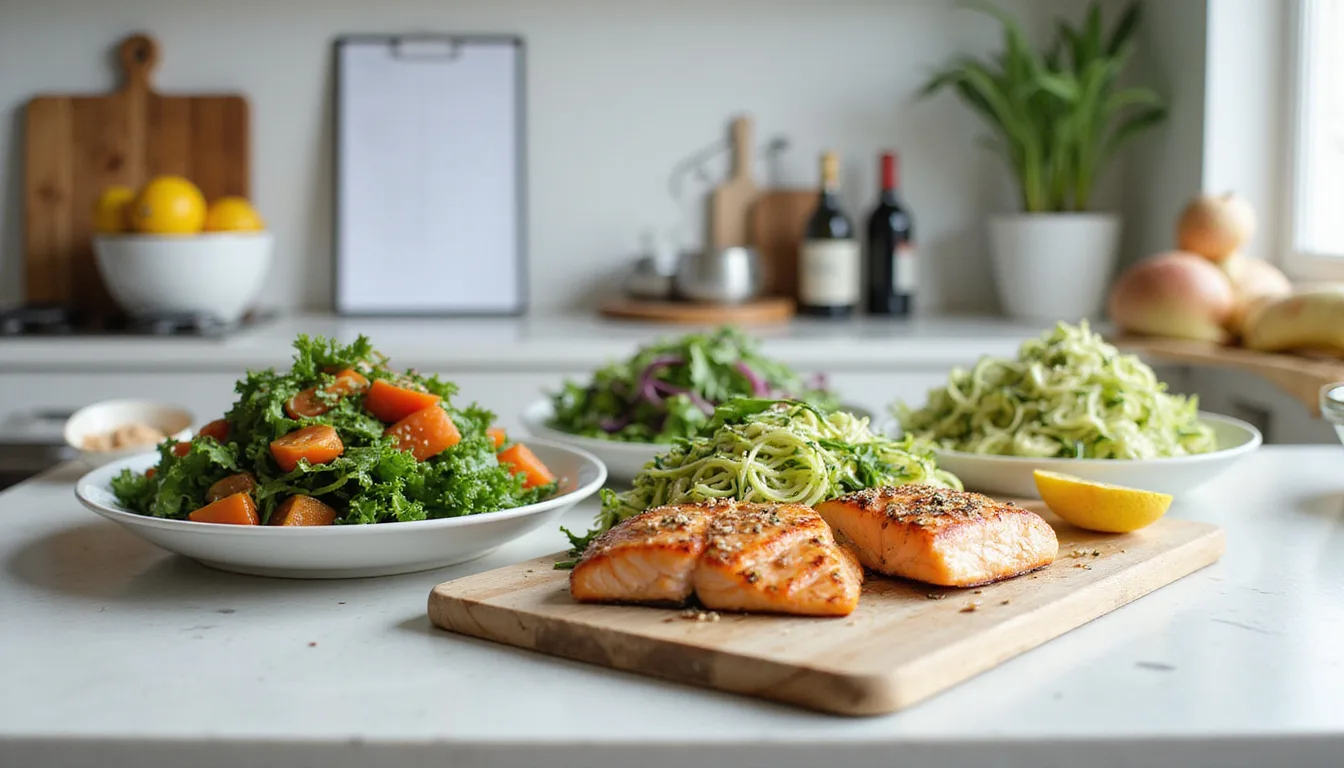
- Dinner: Baked salmon, roasted Brussels sprouts, and a side of sautéed zucchini
Day 2
- Breakfast: Full-fat Greek yogurt with chia seeds, walnuts, and cinnamon
- Lunch: Turkey lettuce wraps with mustard, pickles, and carrot sticks
- Snack: Celery sticks with almond butter
- Dinner: Beef stir-fry with broccoli, peppers, and cauliflower rice
Day 3
- Breakfast: Scrambled eggs with smoked salmon and avocado
- Lunch: Tuna salad on mixed greens with cucumbers and radishes
- Snack: A handful of mixed nuts
- Dinner: Grilled shrimp, asparagus, and a side salad
Day 4
- Breakfast: Veggie egg muffins (eggs, peppers, onions, spinach baked in muffin tins)
- Lunch: Chicken thighs with roasted cauliflower and a cabbage slaw
- Snack: Cottage cheese with sliced strawberries
- Dinner: Pork chops with sautéed green beans and mushrooms
Day 5
- Breakfast: Protein smoothie made with protein powder, unsweetened almond milk, spinach, a few berries, and chia seeds
- Lunch: Egg salad served in lettuce wraps with sliced cucumbers
- Snack: Cheese slices with cherry tomatoes
- Dinner: Baked cod with lemon, roasted broccoli, and a side of sautéed kale
Day 6
- Breakfast: Two fried eggs on a bed of arugula with olive oil and cherry tomatoes
- Lunch: Burger patty (without a bun) with avocado, lettuce, tomato, and pickles, plus a side salad
- Snack: Olives and a few almonds
- Dinner: Roasted chicken, sautéed cabbage, and a small portion of roasted carrots
Day 7
- Breakfast: Greek yogurt parfait with pumpkin seeds, shredded coconut, and a few blueberries
- Lunch: Grilled steak on spinach with roasted peppers and onions
- Snack: Bell pepper strips with guacamole
- Dinner: Zucchini noodles with ground turkey in a red sauce and sprinkled parmesan
Starch Free Diet and Weight Loss: How It Works
Weight loss works when you use fewer calories than you burn. A starch free diet can help you in this way:
-
Reduced Energy Density
Cutting out calorie-dense starch foods like breads, pasta, and pastries often makes you eat fewer calories. When you swap these foods with more fibrous vegetables and lean proteins, you feel full with less food. -
Increased Satiety
Foods high in protein and fat fill you up more. With balanced meals full of these, you may snack less and reduce later hunger. -
Stable Blood Sugar and Insulin
Removing many starchy foods keeps blood sugar from rising too fast. This can help keep you steady and may reduce cycles of feeling low and then craving more food. -
Less Processed Food
Many starch foods are very processed and easy to eat in excess. Cutting them means you eat more whole foods that help control portions.
Important: Do Not Only Cut Out—Replace Smartly
When you remove foods high in starch, you must add other good foods to your plate. Without these, you can feel tired, miss important vitamins, or face strong hunger later.
Make sure each meal has these parts:
- Protein: About 20–35 g per meal for most adults
- Healthy fat: For instance, 1–2 tbsp of oil, ¼–½ avocado, or a small handful of nuts or seeds
- Fiber: At least one large serving of non-starchy vegetables
Practical Tips for Sticking to a Starch Free Diet
Switching to a starch free diet needs some change. Use these ideas to make the shift easier:
1. Plan Simple, Repeatable Meals
You do not need many different meals each week. Pick two or three options for each meal and use them often:
- Breakfast: eggs with vegetables, or a bowl of Greek yogurt
- Lunch: a big salad with protein, or lettuce wraps
- Dinner: a protein dish paired with two vegetables
2. Shop Around Your Food Store’s Edge
Fill your cart with these sections:
- Produce
- Meat and seafood
- Dairy (if you use it)
- Healthy fats (oils, nuts, seeds)
Stay away from inner aisles with pasta, cereal, crackers, or baking mixes.
3. Read Food Labels
Some hidden starch may appear in sauces or gravies thickened with flour or cornstarch. Certain processed meats use fillers. Products marked as “low fat” may use more starch or sugar. Look at the “total carbohydrates” and avoid ingredients like wheat, rice flour, potato starch, cornstarch, or maltodextrin.
4. Get Ready for Social Meals
When you dine out or attend an event, plan ahead:
- Pick grilled or baked proteins with vegetables instead of pasta or fries.
- Ask for extra salad or vegetables in place of rice or potatoes.
- Eat a protein snack before you go so you do not arrive very hungry.
5. Drink Enough Water and Watch Your Salts
Cutting starch sometimes lowers total carbs. Your body may then lose more water and salts.
- Drink water often.
- Add a bit of salt to food if you do not have limits.
- Eat foods rich in magnesium and potassium like leafy greens, avocado, and nuts.
Common Mistakes on a Starch Free Diet
Avoid these errors if you want to lose weight and stay healthy:
-
Replacing Starch with Too Much Fat
Using too much oil, butter, or cheese can add many extra calories. Use enough fat for taste but keep portions in mind. -
Not Eating Enough Vegetables
Removing starch does not mean you should cut out plants. Vegetables give you fiber, vitamins, and minerals and add bulk to your meals. -
Sudden and Extreme Changes
If you often eat high amounts of carb foods, remove starch slowly. A sudden change may bring tiredness and irritability. Changing gradually is more lasting. -
Ignoring Protein
It is easy to add fat when you remove starch. Do not forget to put protein on every plate. This helps keep your muscles and stops hunger. -
All-or-Nothing Thinking
If you eat some starch by mistake, do not see it as failure. Simply go back to your next starch free meal and continue.
Who Might Benefit Most from a Starch Free Diet?
This diet may work best for:
- People who gain weight from breads, pasta, and snacks
- Anyone with strong carb or sugar pulls
- Those with prediabetes or insulin resistance (used with medical help)
- People who like clear rules over counting calories
Others may do better by including some starch from whole-food sources like oats, quinoa, and sweet potatoes. The best diet is one you can stick with and that keeps you healthy.
FAQs About a Starch Free Diet
1. Is a starch free diet the same as a low carb or keto plan?
Not exactly. A starch free plan cuts out most starch foods while still letting in some carbs from non-starchy vegetables, a bit of fruit, or dairy. A keto plan is very low in carbs and high in fat. Keto makes you reach a state called ketosis. A starch free plan is less strict.
2. Can you build muscle on a starch free weight loss diet?
Yes. Eat enough protein and overall calories. Add resistance training too. Carbs help with energy, but they are not needed for muscle gain. If your workouts feel weak, you might add a few low-glycemic carbs instead of removing all starch.
3. What can I snack on during a starch free eating plan?
Good snack choices include:
- Hard-boiled eggs
- Greek yogurt or cottage cheese
- Nuts and seeds
- Veggie sticks with hummus (watch the carbs) or guacamole
- Cheese slices with cucumber or peppers
- A small serving of berries with nuts
Aim for snacks with protein and a bit of fat for lasting energy.
Ready to Try a Starch Free Diet?
A starch free diet can help cut cravings, lower calories, and bring whole, nutrient-rich food into your day. This method works best when you build each plate with protein, non-starchy veggies, and healthy fats.
Use the swap ideas and the 7-day meal plan as a guide, not a strict rule. Watch how your body feels. Adjust the parts of your meals until you reach your goals.
If you are ready, try one or two meal ideas from this guide. Set up tomorrow’s menu now. When you feel more energy and control over hunger, you may be inspired to keep going.
If you need help to design a plan that fits your daily life and goals, talk with a registered dietitian or a nutrition coach who can work with you.
[center]Always consult with your doctor prior to making drastic diet changes.[/center]
[center]As an Amazon Affiliate, Savvy Keto makes a small commision (at no extra cost to you) on any purchases you make thru affiliated links you click on.[/center]