

Low Carb Calorie Counting: Stop Guessing, Master Weight Loss Now
You feel stuck after many diets. Low carb calorie counting makes things click. It joins low carb eating with careful calorie checks. This way, you control hunger and weight loss. You learn your body and hold the reins.
This guide shows each step without obsession, starvation, or hard rules.
Why Low Carb Calorie Counting Works So Well

Many see low carb and calorie counting as rivals. They work better when paired.
The logic behind combining low carb and calories
Low carb food cuts hunger, steadies blood sugar, and calms cravings.
Calorie checks keep you under your energy target.
The body burns fat when it uses more energy than you eat.
Fewer hunger spikes make it easier to control calories.
The hidden problem with “just” going low carb
Some start low carb and see quick gains. They then hit a stall because:
- They add hidden calories from cheese, nuts, oils, and keto snacks.
- They treat low carb rules as free rein for portions.
- They drink cream-rich coffee, alcohol, or sugary so-called low carb drinks.
Low carb alone helps but does not force a calorie gap. Low carb calorie counting pairs hunger control with smart data.
Step 1: Get Clear on Your Weight Loss Goal and Timeframe
Before tracking a calorie or carb, set your goal.
How much weight do you want to lose?
Be clear. For example:
- “I want to lose 20 pounds.”
- “I want to drop two clothing sizes.”
- “I want to move from 210 to 180 pounds.”
A clear goal lets you work back to your daily calorie and carb numbers.
What’s a realistic timeline?
A safe pace is about:
- 0.5–1.0% of your body weight per week
- Roughly 0.5–2 pounds per week
Faster loss can happen, yet strict targets may not last.
Step 2: Calculate Your Calorie Target (Without Obsessing)
You do not need perfect math. A rough target will do.
A simple method to estimate daily calories for weight loss
- Write your current weight in pounds.
- Multiply by:
- 10–12 if you are mainly still.
- 12–14 if you move a fair bit.
- 14–16 if you work hard and move a lot.
This gives your maintenance zone. Then, subtract 300–600 calories for a gap.
Example:
Weight 180 lbs and moderately active gives about 180 × 13 = 2340 (maintenance).
Subtract 500 to get close to 1850 calories per day for loss.
This is a starting point. Your body will share hints over time.
Step 3: Set a Carb Limit That Matches Your Lifestyle
Low carb does not mean one set number. There is a scale.
Common daily carb ranges for low carb diets
• Very low carb/keto: 20–50 g net carbs
• Moderate low carb: 50–100 g net carbs
• Lower-carb but flexible: 100–130 g net carbs
Most people can lose weight without strict keto rules. A good start for many is 50–100 g net carbs a day. Focus on vegetables, a bit of fruit, and food with little processing.
You may change this range based on how you feel and progress.
Step 4: Build a Low Carb Macro Framework
You do not need to stress over macros. A simple plan helps with meals.
A balanced low carb macro split
Within your calorie budget, aim at:
- Protein: 25–35% of calories
- Carbs: 10–25% of calories
- Fats: The rest of the calories
Why protein is non-negotiable
Protein protects muscle when you lose fat. It keeps you full and aids your metabolism.
Aim for about 0.7–1.0 grams per pound of your target weight.
For a 150-pound goal, that is 105–150 g of protein per day.
First, fix your protein goal.
Then choose your carb cap (say, 75 g).
Fill the rest of your calories with healthy fats.
Step 5: How to Do Low Carb Calorie Counting Day to Day
The plan must work in your life. Here is how to put it into practice.
Pick your tracking tool
Choose a tool you will use every day:
• An app (like MyFitnessPal, Cronometer, Carb Manager, or Lose It!)
• A simple spreadsheet
• A paper journal with nutrition labels
Log what you eat and drink. Include:
• Portion size
• Calories
• Carbs (count net carbs as total minus fiber and sugar alcohols when needed)
• Optionally, note protein and fat
Start with “just track.” Do not change all at once.
For the first 3–5 days, eat a bit lower in carbs but stay close to normal. Track all details. This will show where extra calories hide in snacks or large portions.
Step 6: Plan Simple Low Carb, Calorie-Aware Meals
You do not need fancy recipes. Simple plans make low carb counting easy.
A basic low carb meal formula
For each meal, choose:
- A protein piece (about the size of your palm):
- Chicken, turkey, lean beef, pork, fish, eggs, Greek yogurt, cottage cheese, tofu, or tempeh.
- Low carb vegetables (1–3 cups):
- Greens, broccoli, cauliflower, zucchini, bell peppers, mushrooms, asparagus, or green beans.
- Healthy fats in set amounts:
- Avocado, olive oil, nuts, seeds, cheese, or olives.
Example low carb meals
• Breakfast:
- 3 scrambled eggs with spinach and mushrooms cooked in 1 tsp olive oil
- ½ avocado on the side
• Lunch:
- Grilled chicken breast
- Large salad with mixed greens, cucumber, tomato, and onion
- 1–2 tbsp olive oil with vinegar
• Dinner:
- Salmon fillet
- Roasted broccoli and cauliflower
- Sautéed zucchini on the side
• Snacks (if you need them):
- Plain Greek yogurt with a few berries
- A small handful of almonds or walnuts
- String cheese or cottage cheese
Log all parts to meet both your calorie and carb targets.
Step 7: Avoid Common Low Carb Calorie Traps
Low carb does not mean unlimited low carb food. Some items hide calories.
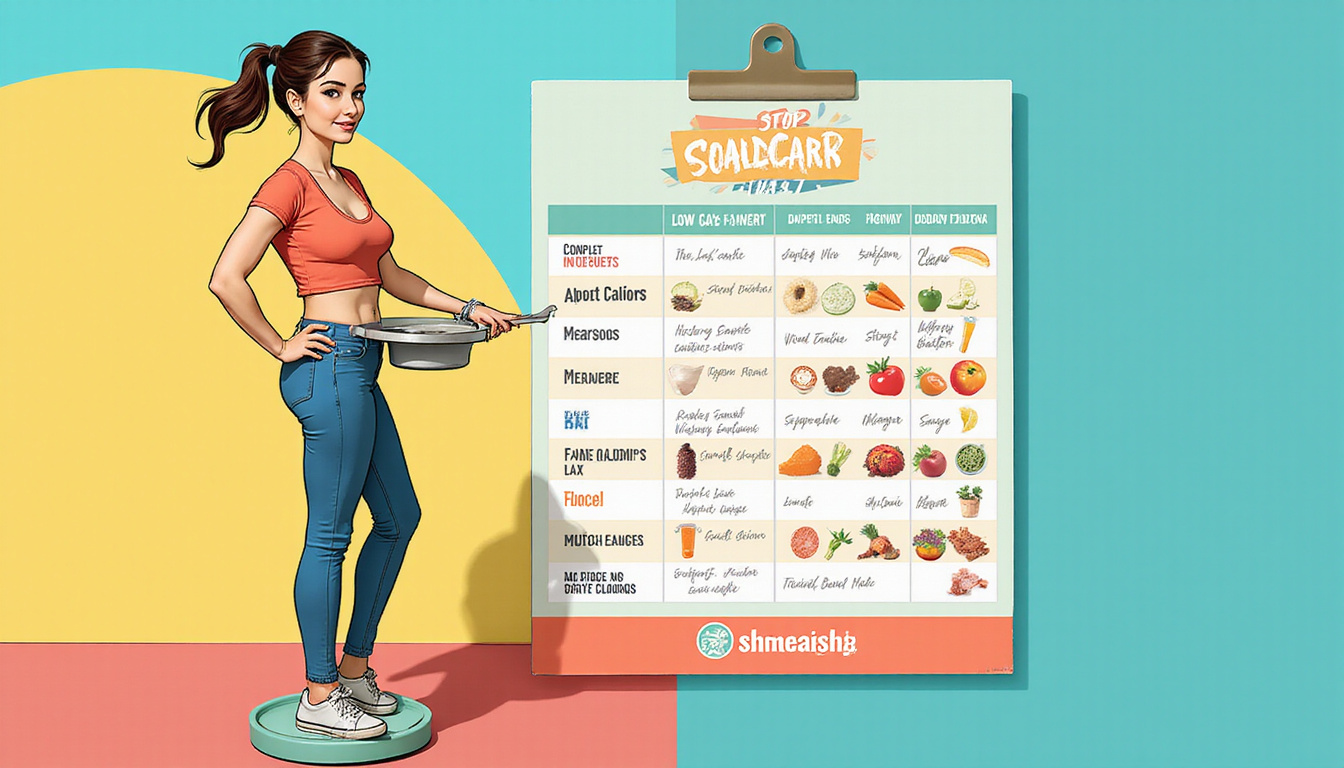
High-calorie items in low carb diets
• Cheese can add calories fast when you overeat slices or shreds.
• Nuts or nut butters bring more calories than you may count.
• Heavy cream and oils pack many calories in little space.
• Packaged “keto” snacks like bars, cookies, or fat treats add up.
• Restaurant meals may hide extra cheese, cream, and oil.
These items are fine when measured. A “small handful” of nuts can bring 200–300 calories.
Step 8: Use Hunger and Energy as Guides
A benefit of low carb calorie counting is fewer wild hunger swings. Some hunger is normal when you eat less.
How to know if your plan is too strict
Watch for signs:
• Constant strong hunger that does not ease over one week
• Foggy thinking, irritability, or poor sleep
• Strong cravings or episodes of overeating
• Losing more than about 2–3 lbs per week after the first week
If you see these, try:
• Adding about 100–200 calories from protein or fiber-rich carbs.
• A slightly higher carb cap if very low carb feels harsh.
• Spreading protein through each meal.
Pick a plan that feels real for many months, not just a few days.
Step 9: Track Progress the Smart Way
The scale helps but it is one sign only.
What to watch besides weight
• Weekly weight trends (use a weekly average)
• Body measurements: waist, hips, and sometimes chest or thighs
• How clothes fit: watch belts, jeans, or sleeves
• Photos taken every 2–4 weeks with the same light and clothes
• Non-scale wins like more energy, better mood, ease in movement, or increased confidence
Remember, daily changes happen from salt, hormones, water shifts, and similar factors. Look at progress in 2–4 week periods.
Step 10: Adjust Your Low Carb Calorie Plan Over Time
Your plan at first is only a start. As you change, your needs change too.
When and how to adjust
After 2–4 weeks, think about these points:
• If you are not losing or your measurements do not change:
- Check that you track carefully.
- Drop another 100–150 calories or lower carbs a bit.
• If you lose too fast and feel low, add about 100–200 calories from protein or fiber-rich carbs.
• If you feel good with your loss, continue as is.
Tweak your plan when you learn more about your body.
Sample One-Day Low Carb Calorie Counting Plan (~1,700–1,800 Calories, ~70g Net Carbs)
Use this plan as a guide you can shape for yourself.
Breakfast
• 2 whole eggs and 2 egg whites, scrambled
• 1 cup spinach with ½ cup mushrooms (cooked)
• 1 tsp olive oil
• ½ of a medium avocado
Lunch
• 4–5 oz grilled chicken breast
• A big salad: 3 cups mixed greens with cucumber, tomato, and onion
• 1.5 tbsp olive oil with vinegar dressing
Snack
• ¾ cup plain Greek yogurt (2% milk fat)
• ¼ cup berries
• 1 tbsp chopped walnuts
Dinner
• 5 oz baked salmon
• 1 cup roasted broccoli
• 1 cup roasted cauliflower
• 1 tsp olive oil for roasting
Approximate totals:
• Calories: 1,700–1,800
• Protein: 120–130 g
• Net carbs: ~60–75 g
• Fats: the remainder
Log your food in your app and adjust portions as needed.
Troubleshooting: When Low Carb Calorie Counting Stops Working
Plateaus occur and you can fix them. Check this list.
1. Are you still in a calorie gap?
As you lose weight, the food you need for maintenance drops. What once was a gap might now be enough to maintain weight.
• Recalculate your calorie needs with your new weight.
• Watch portion sizes. It may help to use a food scale for a few days.
2. Are extra bites sneaking in?
Look for these:
• Sneaking tastes while cooking
• Extra cream in coffee
• Weekend alcohol
• Unlogged dressings or sauces
• Nibbling on leftovers
These extra bits can end your calorie gap if they happen daily.
3. Are you missing extra carbs?
Some low carb foods add more carbs than expected:
• More pieces of low carb bread or wraps
• Large servings of nuts and seeds
• Sauces with sugar hidden inside
• Protein bars or shakes that include extra carbs
If weight loss stops, tighten your carb sources and stick with whole foods.
FAQ: Low Carb Calorie Counting, Answered
1. Do I have to count every calorie on a low carb diet?
You do not have to. Many find that counting speeds results and removes guesswork. Some lose weight on low carb alone. But when you stall or regain weight, tracking for a few weeks shows you the details. Later, you may choose to count less when you know your portions well.
2. Is counting carbs or calories more important on a low carb diet?
Calories hold the key for fat loss. Without a calorie gap, fat will not leave your body. Carb control helps keep hunger and cravings low. The best method uses both: set a carb cap you enjoy and keep calories under your target.
3. Can low carb and calorie counting work for long-term maintenance?
Yes. It is a method many follow over the long haul. When you reach your goal, you can slowly add calories until you find your new balance. Many switch to checking in periodically—tracking for a few days each month—to stay on track while keeping a low carb style.
Stop Guessing. Start Mastering Your Weight Loss Now.
You do not need another extreme plan or a 30-day challenge. You need a clear, flexible system you can use every day.
By joining low carb eating with careful calorie checking, you:
• Hold hunger and cravings in check.
• Remove mystery from weight loss—no more doubts about why nothing works.
• Learn exactly what and how much your body needs.
• Gain skills that help for life, not just a short phase.
Start today:
- Set your weight loss goal and timeline.
- Estimate your daily calorie target.
- Choose a carb range that fits (for example, 50–100 g net carbs).
- Track all you eat for the next 7 days without judgment.
- Adjust based on your results and how you feel.
Commit to just two weeks of honest low carb calorie counting. You will learn your body and see changes on the scale and in your clothes.
Stop guessing. Take control. Master your weight loss now with low carb calorie counting, and turn dieting into a lasting, simple way of life.
[center]Always consult with your doctor prior to making drastic diet changes.[/center]
[center]As an Amazon Affiliate, Savvy Keto makes a small commision (at no extra cost to you) on any purchases you make thru affiliated links you click on.[/center]