Low-carb, high-fat (LCHF) eating grows popular as it gives three things many seek: steady fat loss, constant energy, and better health.
Keto terms, mixed blogs, and strict diet views can mix messages.
This guide explains LCHF plainly so you can decide if it fits you and how to work it into life.
What Is LCHF, Really?
LCHF means you eat by lowering carbs and using fat for energy.
• You lower carbs a lot
• You choose fat as the main fuel
• You keep protein at a medium level

LCHF covers strict plans like keto (very few carbs, under 20–50 g per day) and looser plans (50–100+ g per day, based on your needs).
Its main focus is to cut sugar and carb spikes in the blood.
A typical LCHF pattern may be:
• Carbs: about 5–25% of calories
• Protein: about 15–25% of calories
• Fat: about 50–75% of calories
These three points stand out:
- Limit carbs
- Do not fear fat
- Choose real, whole food
How LCHF Helps You Burn Fat
Many choose LCHF to burn fat.
It works by several linked ways.
1. Lower Insulin Means Easier Fat Use
Insulin helps store energy.
A high-carb meal makes insulin rise to move sugar into cells.
With LCHF:
• Carb intake falls
• Blood sugar and insulin peaks drop
• The body uses stored fat for energy
This change, from using mostly sugar to burning fat and ketones, helps many lose weight and feel less hungry.
2. Better Appetite Control
LCHF often makes you eat less without counting calories:
• Meals with fat and protein fill you up
• Steady blood sugar cuts cravings
• Fewer processed foods lead to eating only when hungry
Many find that eating less feels simple and lasting on LCHF.
3. Fewer Cravings and Less Emotional Eating
Sugar and refined carbs push the brain’s reward link.
This may cause a cycle: craving → overeating → crash → craving.
Cutting these carbs helps:
• Shrink strong sweet cravings
• Smooth mood swings from blood sugar dips
• Make junk food less tempting without big willpower fights
How LCHF Boosts Energy and Mental Clarity
Many start LCHF for weight loss.
They stay for the energy boost.
From Energy Spikes to Steady Fuel
High-carb diets can create energy ups and downs:
• Large carb meals send blood sugar high
• An insulin rise brings a quick drop and tiredness
With LCHF, over time your body uses:
• Stored fat
• Fat from the food
• Ketones from burning fat
This switch gives a steady supply of fuel for both your body and mind.
Mental Focus and Ketones
Ketones serve as a backup fuel for the brain when carbs are low.
Many notice:
• Sharper focus
• A steadier mood
• Fewer afternoon lows
Studies on both ketogenic and low-carb diets show benefits for conditions such as epilepsy and may help other brain conditions (Harvard T.H. Chan School of Public Health).
Even a moderate drop in carbs can bring more constant energy and better mental clarity.
LCHF vs. Keto vs. “Just Low Carb”: What’s the Difference?
Terms may mix you up.
Here is a simple look:
• LCHF (Low-Carb, High-Fat)
– A broad way to eat with fewer carbs and more fat
– Carb counts can change widely (often up to 100–150 g for active folks)
• Ketogenic Diet (Keto)
– A stricter LCHF type
– Keeps carbs very low (under 20–50 g/day)
– Aims for nutritional ketosis with higher blood ketones
• Low-Carb (General)
– Means fewer carbs than common Western patterns (250–300 g/day or more)
– May still allow a fair amount of carbs, mostly from whole foods
See LCHF as a path that stretches from loose plans to strict keto.
You need not go full keto to see many of these benefits; the best choice is the one that fits your body, goals, and life.
What You Actually Eat on LCHF
LCHF means more than cutting out bread and sugar.
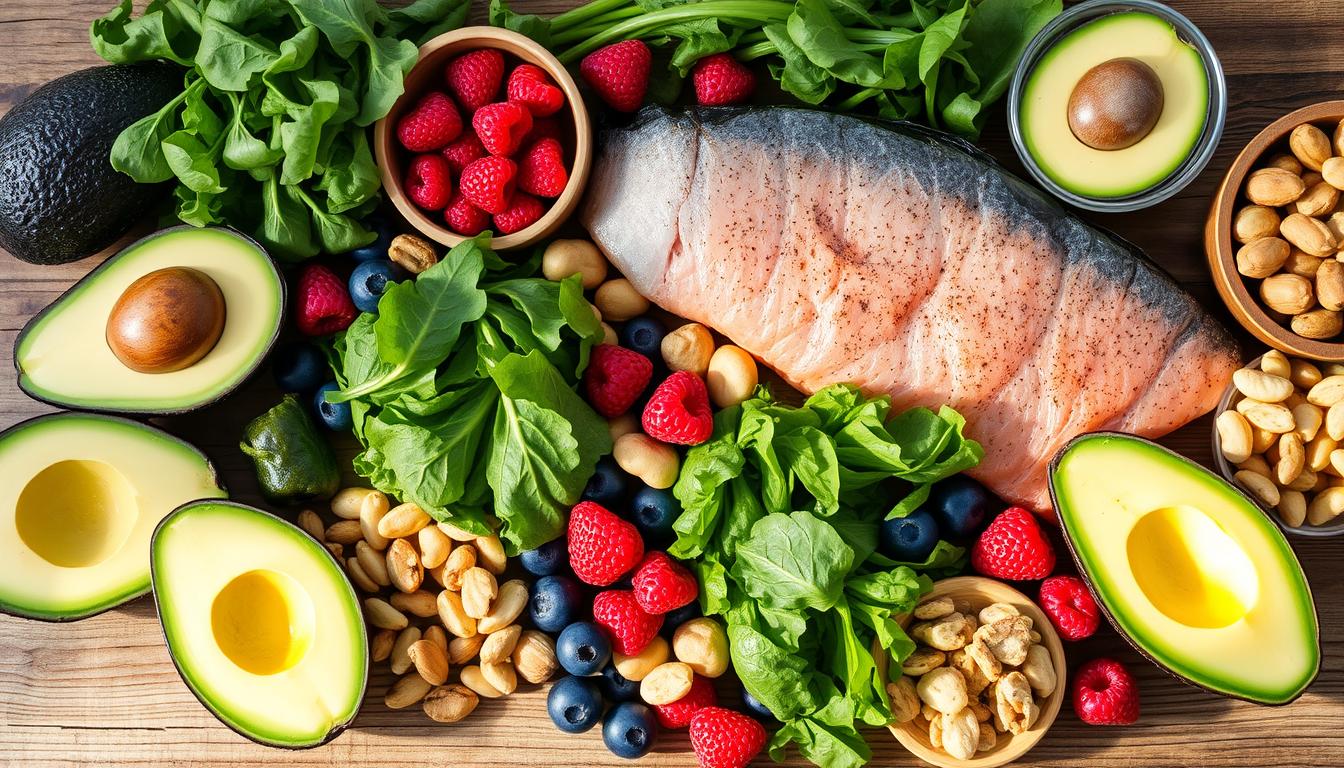
It means replacing them with foods that are full of nutrients and taste good.
LCHF-Friendly Foods
Proteins (in moderate amounts):
• Meats: beef, lamb, pork, game
• Poultry: chicken, turkey, duck
• Fish: salmon, sardines, mackerel, white fish
• Eggs: whole eggs (free range if you can)
Fats and Oils (your main energy source):
• Avocados and avocado oil
• Olive oil extra virgin
• Butter and ghee
• Coconut oil and coconut milk
• Fats from animals (tallow, lard) if they come from good sources
Low-Carb Vegetables:
• Leafy greens: spinach, kale, lettuce, arugula
• Brassicas: broccoli, cauliflower, cabbage, Brussels sprouts
• Others: zucchini, peppers, asparagus, cucumber, mushrooms
Dairy (if you handle it well):
• Full-fat, unsweetened yogurt
• Cheese
• Heavy cream
Nuts, Seeds & Extras:
• Almonds, walnuts, macadamias, pecans
• Chia seeds, flax seeds, pumpkin seeds
• Berries in small amounts
Foods to Minimize or Avoid
• Sugar: soda, candy, pastries, desserts
• Refined grains: white bread, pasta, crackers, most cereals
• Starches: potatoes, rice, corn, and many baked items
• Highly processed foods and some seed oils (like soybean, corn, or canola) when you can
How to Start LCHF Without Overwhelm
Many try to change everything at once.
A step-by-step switch works best.
Step 1: Cut Out Sugary, Refined Carbs
Begin with:
• Sugary drinks like soda, juice, and sweetened coffee or tea
• Candy, baked goods, breakfast cereals
• White bread, white pasta, most snack foods
Swap these for water, sparkling water, herbal tea, and meals built with protein, veggies, and healthy fat.
Step 2: Build Your Plate with Protein, Veggies, and Fat
For each meal, follow a clear plan:
- Protein: meat, fish, eggs, tofu, etc.
- Low-carb vegetables: fill half your plate.
- Healthy fat: use it in cooking or add it in dressings, butter, avocado, cheese, or nuts.
Step 3: Adjust Carbs Bit by Bit
You can:
• Begin with a higher-carb version of LCHF (around 75–100 g carbs/day)
• Lower the carbs slowly depending on your goals and feelings

Some do best with very low carb; others prefer a bit more, especially if active.
A Sample Day on LCHF
Here is one way LCHF can work in your day:
Breakfast
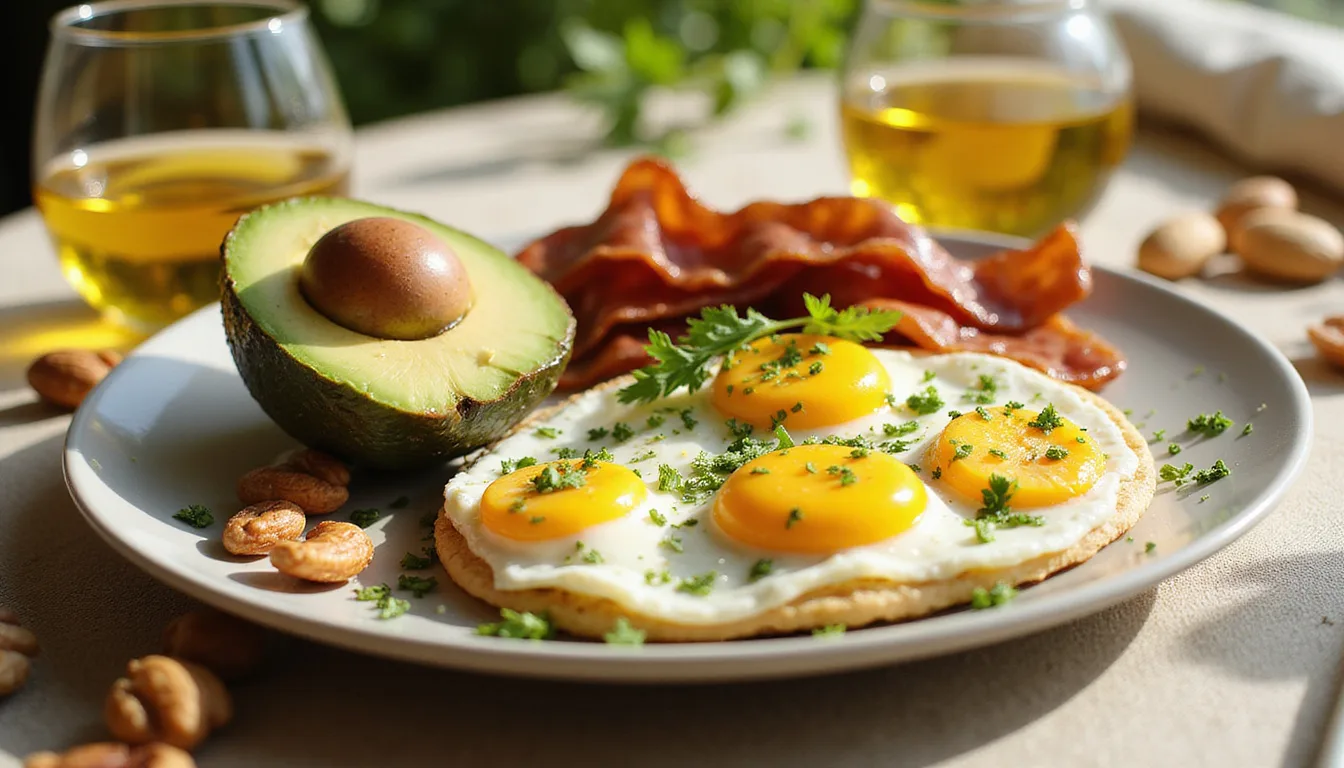
• An omelet with spinach, mushrooms, and cheese cooked in butter
• Half an avocado
• Black coffee or coffee with a little cream
Lunch
• Grilled salmon or chicken thighs
• A large salad with mixed greens, cucumber, peppers, and olives
• Olive oil and lemon on top
Snack (if needed)
• A small handful of macadamia nuts
• A few berries with full-fat Greek yogurt (unsweetened)
Dinner
• A pan-seared steak or baked cod
• Broccoli and cauliflower roasted in olive oil
• A side of sautéed zucchini
Dessert (optional)
• One or two squares of high-cocoa (85%) dark chocolate if it fits your carb goal
Common LCHF Mistakes (And How to Avoid Them)
LCHF is simple in idea.
Some common errors include:
1. Worrying About Fat
After years of low-fat advice, many try to eat low-carb and still avoid fat.
This can make you feel:
• Hungry all the time
• Low on energy
• Draw toward cravings and over-eating
Fix: When you cut carbs, use healthy fat to fill the gap.
Do not shy away from olive oil, butter, avocado, or fattier meat cuts.
2. Missing Enough Electrolytes
Low insulin and fewer carbs make your body lose more salt and water.
This may bring symptoms like:
• Headaches
• Tiredness
• Dizziness
• Muscle cramps
Fix: In the first few weeks try to get:
• Enough salt (if your doctor agrees)
• Plenty of fluids
• Foods that supply potassium and magnesium (like leafy greens, avocados, nuts)
3. Eating Too Much “Keto Junk Food”
LCHF does not give you a free pass to eat all “keto” cookies, bars, candies, or large amounts of nuts and cheese.
This habit can hold back fat loss.
Fix: Put real food at the front and keep extra, high-calorie treats for rare times.
4. Ignoring What Your Body Tells You
A few signals may show LCHF is not right as you start:
• Low energy after an adaptation period
• Stomach troubles
• Trouble sleeping
Fix: Tweak your carb levels up or down and check meal times.
LCHF should bring clear benefits in how you feel.
Who Can Benefit Most from LCHF?
Though results vary, LCHF may help those who are:
• Overweight or seeking steady fat loss
• With insulin issues or type 2 diabetes (use with medical help)
• Facing metabolic syndrome, high triglycerides, or belly fat
• Troubled by sugar cravings and energy dips
• Preferring savory, fatty meals over high-carb options
Many studies show that low-carb plans can help control blood sugar, triglycerides, and HDL.
Remember that long-term results differ, and it is wise to check in with a doctor.
Is LCHF Safe for Everyone?
It is not for all.
Be sure to talk with your doctor if you:
• Have type 1 diabetes or use insulin for type 2
• Take medicine for blood pressure or blood sugar
• Have had an eating disorder
• Are pregnant or breastfeeding
• Have kidney, liver disease, or other serious health concerns
For these cases, guidance from a healthcare expert is key.
LCHF and Exercise: Can You Still Perform Well?
Some worry a low-carb plan might hurt workouts.
Here is what many observe:
• In the first 2–4 weeks, your performance might drop as the body shifts from burning sugar to burning fat
• Later, many feel more endurance, better recovery, and steadier energy during long sessions
For athletes in intense events, a plan with a small carb boost around training sometimes works best.
For everyday fitness, many lift weights, jog, cycle, or attend classes without much need for extra carbs once they adapt.
Practical Tips to Make LCHF Sustainable
To keep LCHF as a long-term way of eating, try these ideas:
-
Plan simple meals
Stick with easy recipes you enjoy and repeat them. -
Eat until you feel full
Do not force yourself to eat less; listening to your hunger helps. -
Face social meals with a plan
• Look at menus ahead
• Pick meat or fish with vegetables
• Skip extra bread, fries, or dessert—or have a small taste if it fits -
Keep LCHF snacks ready
• Hard-boiled eggs
• Nuts
• Cheese
• Veggie sticks with dip -
Watch progress beyond the scale
Notice improvements in:
• Energy
• Cravings
• How your clothes fit
• Sleep and mood -
Stay flexible
One off meal does not spoil your plan. Learn and adjust as you move on.
Simple LCHF Pantry Checklist
Use this list to prepare your kitchen:
• Proteins: eggs, frozen fish, ground beef, chicken thighs, canned tuna or salmon
• Fats: olive oil, butter or ghee, coconut oil, avocado oil
• Veggies: frozen broccoli, cauliflower, spinach, mixed greens, zucchini
• Dairy (if it suits you): cheese, heavy cream, full-fat unsweetened yogurt
• Nuts & seeds: almonds, walnuts, chia, flax, pumpkin seeds
• Flavor: herbs, spices, garlic, lemon, salt, and pepper
These items make cooking easier while you stick to LCHF.
LCHF FAQs
1. What is an LCHF diet in simple terms?
An LCHF diet cuts down on carbs like sugar, bread, and sweets.
It uses healthy fats and moderate protein for most calories.
The aim is to keep blood sugar steady, turn on fat burning, and bring better energy and appetite balance.
2. Is LCHF the same as keto?
They are related but not the same.
LCHF is a broad approach with fewer carbs and more fat.
Keto is a stricter plan that keeps carbs very low (under 20–50 g per day) to raise blood ketones.
3. What can I eat on an LCHF meal plan?
Try a meal plan that includes:
• Meat, fish, eggs, chicken, and other protein sources
• Non-starchy vegetables (like leafy greens, broccoli, zucchini, and peppers)
• Healthy fats such as olive oil, butter, avocado, nuts, and seeds
It keeps sugar, refined grains, and starchy foods like bread, pasta, rice, and potatoes to a minimum.
Start Your LCHF Journey Today
If diets that leave you hungry and low on energy have failed, LCHF may suit you better.
By cutting carbs, using healthy fats, and choosing real food, you can help your body burn fat, keep energy steady, and feel well.
You do not need a complete change at once.
Try a single meal, swap a sugary drink for water, or plan one week of LCHF dinners.
When you notice fewer cravings, better focus, and steady fat loss, your drive will grow.
Take the first step today: choose your next meal as LCHF and let that choice build a sustainable, energetic, and healthier life.
[center]Always consult with your doctor prior to making drastic diet changes.[/center]
[center]As an Amazon Affiliate, Savvy Keto makes a small commision (at no extra cost to you) on any purchases you make thru affiliated links you click on.[/center]