Dial in your keto macros. It makes your diet shift from a “sort of low-carb” plan to one that burns fat and saves muscle. If you cut carbs yet feel stuck, hungry, or weak at the gym, your macro ratios need fixing.
This guide explains keto macros in plain words. It shows you the math and helps you adjust your ratios to burn fat while you keep your muscle.
What are keto macros, really?

“Macros” (macronutrients) are three basic nutrient groups that give you calories:
• Carbohydrates – 4 calories per gram
• Protein – 4 calories per gram
• Fat – 9 calories per gram
On a ketogenic diet, your keto macros are the percentages and gram amounts of carbs, protein, and fat you eat to:
- Enter and remain in ketosis
- Burn body fat
- Keep or build lean muscle
Keto is not only “low carb.” It is a plan where you restrict carbs, get enough protein, and eat lots of fat. Your body then uses ketones and fatty acids as fuel instead of glucose.
The classic keto macro ratios (and what they’re for)
Many people start with these common keto ratios:
• Carbs: 5–10% of total calories
• Protein: 20–30% of total calories
• Fat: 60–75% of total calories
For a 2,000-calorie day, the numbers look like this:
• Carbs (5–10%)
– 100–200 calories
– 25–50 g of carbs
• Protein (20–30%)
– 400–600 calories
– 100–150 g of protein
• Fat (60–75%)
– 1,200–1,500 calories
– About 133–167 g of fat
These numbers serve as starting points. Your best keto macros change with your goal, body type, and training habits.
Step 1: Set calories for your primary goal
Your macros work only when your total calories match your goal:
• For fat loss: You cut calories
• For muscle gain: You add a small surplus
• For body recomposition (lose fat while gaining muscle slowly): You stay near maintenance with enough protein and exercise
A simple calorie plan:
• For fat loss:
– About 10–12 calories per pound of current body weight
• For maintenance:
– About 13–15 calories per pound
• For muscle gain:
– About 16–18 calories per pound if you are lean and train hard
For example, a 180-lb person aiming for fat loss might use:
180 × 11 ≈ 2,000 calories/day.
Once you set the calories, you can put in your keto macros.
Step 2: Set protein to protect your muscle
On keto, protein keeps your muscle safe. With too little protein, you risk muscle loss. While high protein might slow ketosis for some, this is not a major concern when carbs remain low.
Most active people use a range of:
• 0.8–1.0 grams per pound of goal body weight
For example, if you weigh 200 lb and set a goal of 170 lb:
• Protein target: 135–170 g/day
For lean lifters or those cutting hard:
• Use 1.0–1.2 g per pound of target weight to help keep muscle and control hunger.
Protein matters because it:
• Fills you up
• Stops your body from burning muscle for fuel
• Helps you recover after training
• Maintains or boosts your metabolism
Aim to have 20–30 g of protein in each meal. If you lift weights or train hard, you can use the higher range.
Step 3: Set carbs low enough to enter ketosis
For your liver to use fat instead of glycogen, your carb intake must stay low.
A common start is:
• Total carbs: 30–50 g per day
• Net carbs (total carbs minus fiber): 20–30 g per day
Most people stay in ketosis with 20–30 g net carbs. Some active or very muscular people may handle more while staying in ketosis. Begin low and try small adjustments.
Focus on these tips when choosing carbs:
• Keep starches and sugars very low
• Get most carbs from non-starchy vegetables (leafy greens, broccoli, cauliflower)
• Use fiber (from vegetables, chia, flax) to help digestion and keep you full
Step 4: Fill the rest with fat
After setting protein and carbs, fat fills your remaining calories. In keto, fat is more than just a nutrient; it is your main fuel.
For a 180-lb person on 2,000 calories:
- Protein: 150 g
– 150 g × 4 = 600 calories - Carbs: 25 g net (~35 g total)
– 25 g × 4 = 100 calories (net; total is slightly higher because of fiber) - Calories used so far: 700
- Remaining for fat: 2,000 – 700 = 1,300 calories
- Fat grams: 1,300 ÷ 9 ≈ 145 g of fat
A summary of these macros:
• Protein: 150 g
• Net carbs: 25 g
• Fat: 145 g
• Total: About 2,000 calories
This setup gives roughly:
• Carbs: 5%
• Protein: 30%
• Fat: 65%
It is a classic plan that helps you keep muscle while using keto.
How keto macros change for different goals
1. For fat loss while keeping muscle
Focus on a calorie cut, high protein, and enough fat.
• Calories: Around 10–12 cal per pound of current weight
• Protein: 0.8–1.0 g per pound of goal weight (or up to 1.2 g for lean lifters)
• Net carbs: 20–30 g
• Fat: Fill the rest of the calories
Tips:
• Do not cut both calories and fat so low that you feel bad; you need enough fat to stay alert.
• If weight loss stops for 2 weeks or more, drop your fat by about 10–15 g/day and watch for 10–14 days.
2. For muscle gain on keto
Focus on a small calorie surplus, high protein, and careful carb use.
• Calories: About 16–18 cal per pound of lean body mass or 13–15 cal per pound total for a slight surplus
• Protein: 1.0–1.2 g per pound of goal weight
• Net carbs: 20–40 g (many lifters work better near 40 g)
• Fat: Fill your remaining calories
Tips:
• Use carbs before or after workouts (for example, from vegetables and a few berries).
• Watch your strength; if it increases, your plan is on track.
3. For body recomposition
Focus on near-maintenance calories, high protein, and consistent training.
• Calories: Around 13–15 cal per pound of body weight
• Protein: 0.8–1.0 g per pound of goal weight
• Net carbs: 20–30 g
• Fat: Fill the rest
This plan works slowly but can build strength and improve body shape over time.
Example keto macro setups (real-world scenarios)
Example A: 140-lb woman, aims for fat loss, moderately active
Goal: Lose 15 lb and keep strength with 3 lifting days per week
Calories: 140 × 11 = About 1,540 calories
Set macros:
• Protein: 0.9 g × 125 lb goal = About 110 g
– 110 g × 4 = 440 cal
• Net carbs: 25 g
– 25 g × 4 = 100 cal
• Fat calories: 1,540 – (440 + 100) = About 1,000 cal from fat
• Fat grams: 1,000 ÷ 9 ≈ 111 g
Final numbers:
• Protein: 110 g
• Net carbs: 25 g
• Fat: 110–115 g
• Calories: Around 1,540
Example B: 200-lb man, pursues body recomposition, lifts heavy
Goal: Lose fat slowly while keeping or gaining muscle, training 4–5 days per week
Calories: 200 × 14 = About 2,800 calories
Set macros:
• Protein: 1.0 g × 185 lb goal = About 185 g
– 185 g × 4 = 740 cal
• Net carbs: 30 g
– 30 g × 4 = 120 cal
• Fat calories: 2,800 – (740 + 120) = About 1,940 cal from fat
• Fat grams: 1,940 ÷ 9 ≈ 215 g
Final numbers:
• Protein: 185 g
• Net carbs: 30 g
• Fat: 210–220 g
• Calories: Around 2,800

Common keto macro mistakes that spoil results
Even when you get your keto macros mostly right, watch for these issues:
- Not enough protein
– It makes you lose muscle, lower your metabolism, and get hungrier.
– Fix: Aim for at least 0.8 g per pound of target weight. - Hidden carbs in foods
– Sauces, dressings, snacks, nuts, and drinks may add extra carbs.
– Fix: Track your food for 1–2 weeks and learn which foods add carbs. - Overeating fat “because keto”
– Keto does not mean you can use extra butter or oil without care.
– Fix: Use fat only to reach your macro goal. - Not updating macros as you lose weight
– As you lose weight, your calorie burn drops.
– Fix: Recalculate your numbers every 10–15 lb of weight change. - Ignoring your salt and water needs
– Low-carb eating removes extra sodium and water; imbalances can hurt energy and cause a “keto flu.”
– Fix: Get enough sodium, potassium, and magnesium (from broth, mineral salts, greens, or supplements).
For more on low-carb and keto science, see reviews from the Harvard T.H. Chan School of Public Health (source: Harvard T.H. Chan).
How to track your keto macros
You will not track forever, but you should monitor closely for the first few weeks.
Tools and habits
• Use a tracking app (Cronometer, MyFitnessPal, Carb Manager)
• Weigh your foods with a kitchen scale for accurate numbers
• Log every item that has calories—oils, cream, nuts, sauces, even small bites
A simple daily macro checklist
• Hit your protein target within about 10 g
• Stay under your net carb limit (usually 20–30 g)
• Use fat to reach your total calorie and macro numbers
• Check your hunger, energy, workouts, and weight each week and adjust if needed
How training affects your ideal keto macros
Your daily activities change the best keto macro setup for you.
Strength training / bodybuilding
• Use more protein (0.9–1.2 g per pound of target weight)
• Keep carbs moderate (20–40 g net) and eat them before or after training
• Use enough fat to stay energized
Endurance training
• Some athletes use a small dose of carbs around workouts or a higher-carb day each week.
• Keep protein steady and add a few more carbs while watching your state of ketosis and how you perform.
Mostly sedentary
• You may need only 20–25 g net carbs
• Protein stays in the regular range
• Fat adjusts to meet a lower calorie need
Sample one-day keto menu (macro-aware)
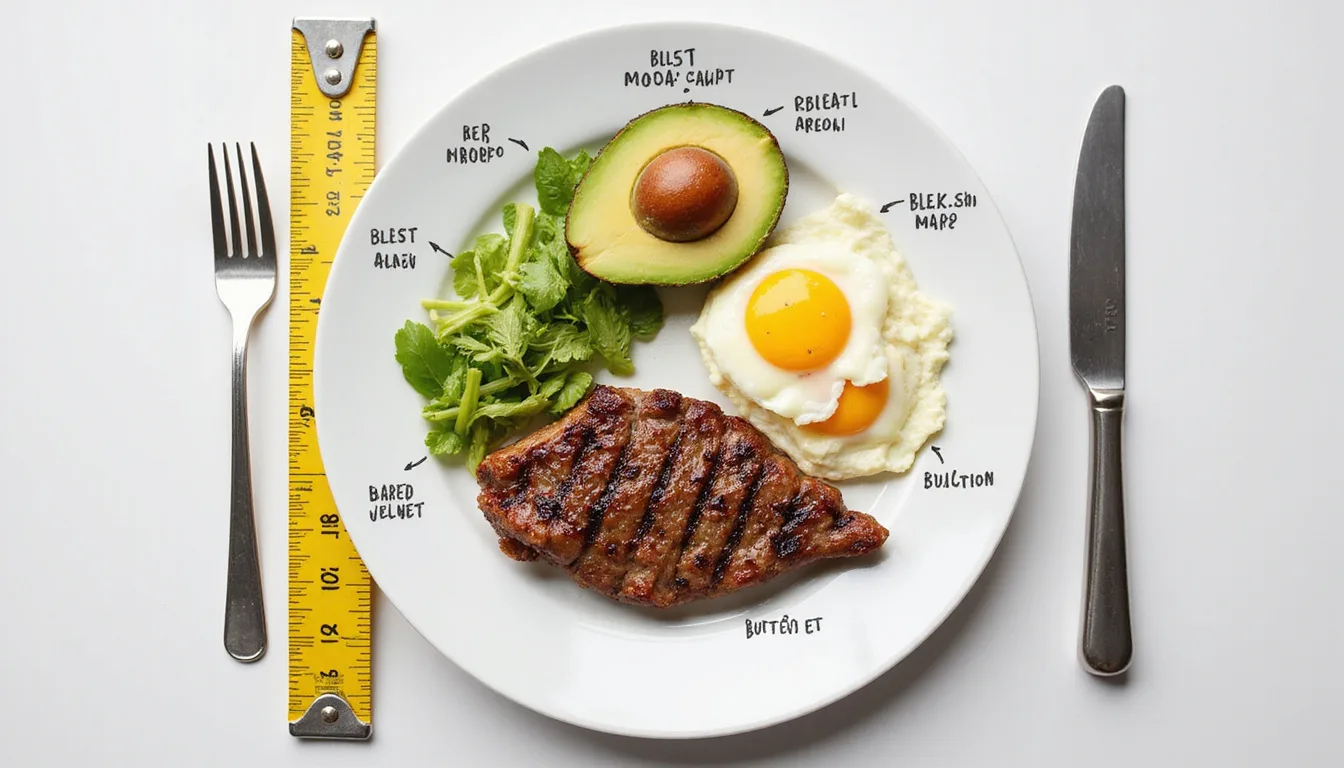
Using the 180-lb, 2,000-calorie example (150 g protein / 25 g net carbs / 145 g fat):
Breakfast
• 3 eggs cooked in 1 tbsp butter
• 2 oz avocado
• 1 oz cheddar cheese
Lunch
• 5 oz grilled chicken thigh
• 2 cups mixed leafy greens
• 2 tbsp olive oil with vinegar
• 1 oz walnuts
Snack
• 2 oz full-fat Greek yogurt (unsweetened)
• 10 raspberries
• 1 tbsp chia seeds
Dinner
• 6 oz salmon
• 1.5 cups roasted broccoli with 1 tbsp olive oil
• Side salad with 1 tbsp olive oil
This plan roughly gives:
• Protein: About 145–155 g
• Net carbs: About 20–25 g
• Fat: About 140–150 g
It is close enough for real life, which is what matters.
Fine-tuning your keto macros over time
Your first keto macro plan is a test. Let your body show you the result. Adjust based on:
• Your weight and measurements (waist, hips, etc.)
• Your strength and performance
• Your energy, sleep, and mood
• Your hunger and cravings
How to adjust smartly
• If fat loss stops for 2 or more weeks, drop your fat by about 10–15 g/day (roughly 90–135 calories)
• If your strength drops and you feel low, add 10–20 g more of protein or 5–10 g more net carbs around workouts and then watch your progress
• If you lose weight too fast and feel weak, add a few calories, mainly from fat or protein
Change one factor at a time and let it run for at least 10–14 days before checking again.
FAQ: keto macros and practical questions
1. What are the best keto macro ratios for beginners?
A strong starting split is:
• 5–10% carbs (20–30 g net)
• 20–30% protein (0.8–1.0 g per pound of target weight)
• 60–75% fat
Watch how you feel, your energy levels, and your fat loss before you make changes.
2. How do I calculate my keto diet macros without stress?
Follow these steps:
- Pick your calories (10–12 cal/lb for fat loss, around 13–15 for maintenance).
- Set your protein at 0.8–1.0 g per pound of target weight.
- Limit net carbs to 20–30 g.
- Use fat to fill the remaining calories.
Apps and online calculators can help, but knowing the process keeps you in control.
3. What if my keto macro calculator gives a different plan?
Each calculator has its own method. Use any result as a starting template. Watch your weight, your strength, and how you feel for 3–6 weeks and adjust based on your own results.
Put your keto macros to work
You do not need fancy supplements or perfect genes to make keto work. You need:
- A clear calorie target that meets your goal
- The right mix of protein, carbs, and fat
- A plan to track and adjust for a few weeks
Set your keto macros with these steps. Track them well for the next 14 days and listen to your body through changes and performance. Your next workout and later results will show that your work was worth it.
[center]Always consult with your doctor prior to making drastic diet changes.[/center]
[center]As an Amazon Affiliate, Savvy Keto makes a small commision (at no extra cost to you) on any purchases you make thru affiliated links you click on.[/center]