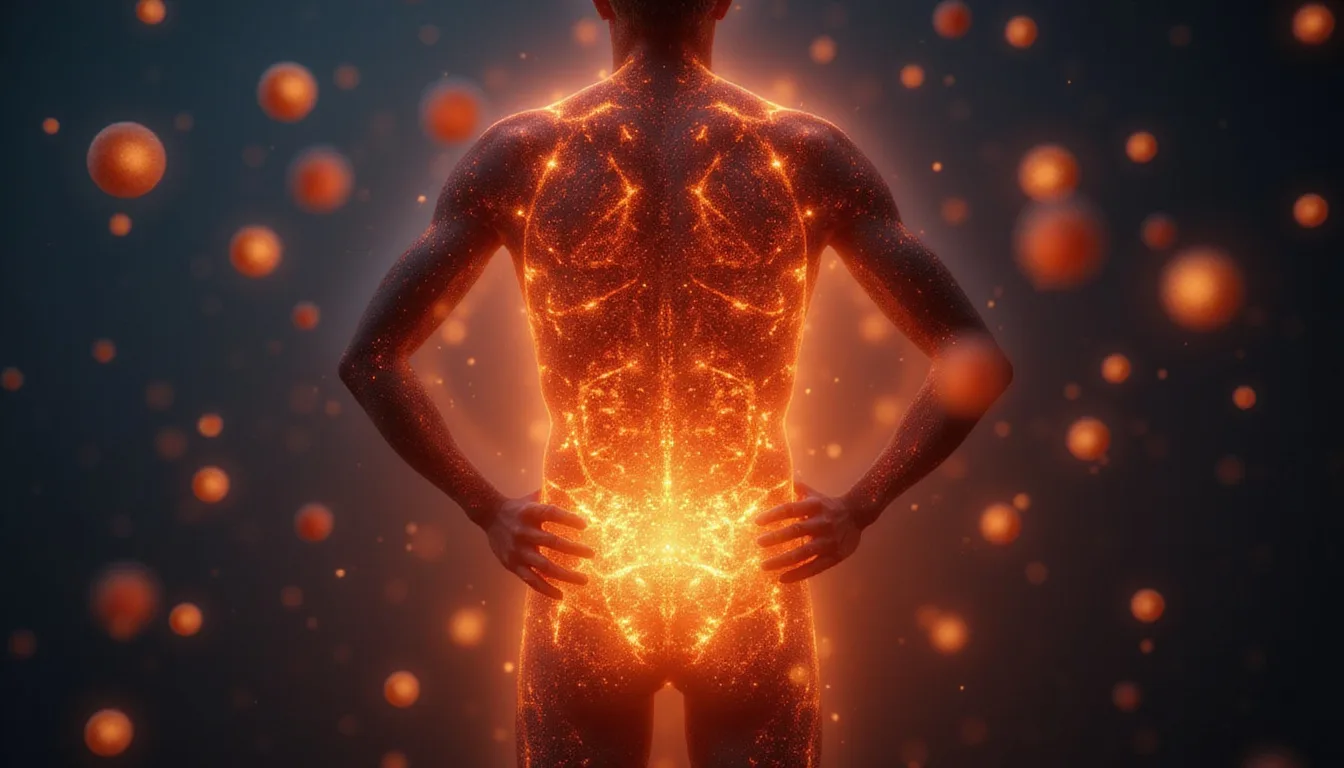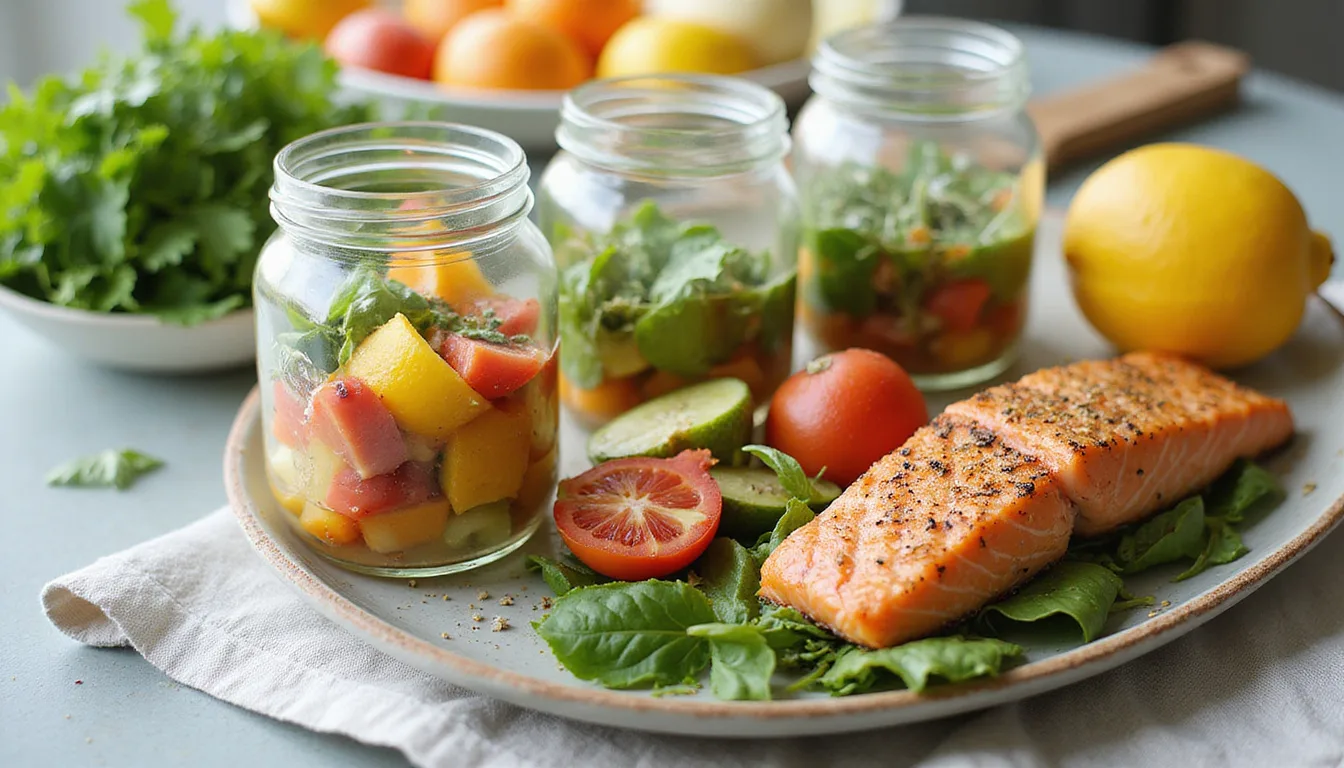

Body recomposition means losing fat while you build muscle at the same time.
You do not look at the scale alone. You watch how your weight changes, so there is less fat and more lean mass.
This path helps you look better, feel stronger, and move easier even if the number on the scale stays near the same.
This guide shows you step-by-step how body recomposition works, who gets the best results, and how to train, eat, and rest to lose fat and build muscle at once.
What Is Body Recomposition?

Traditional goals in fitness split into two ideas:
- Cutting – You eat fewer calories to lose weight. You lose fat but may lose some muscle too.
- Bulking – You eat more calories to gain weight. You gain muscle but often also some fat.
Body recomposition breaks that old "bulk or cut" way of thinking. You try instead to:
- Lower body fat
- Gain or keep lean muscle
- Let your scale weight stay the same or change very little
In practice, the change looks like this:
- Start at 180 lb with 25% body fat (45 lb fat and 135 lb lean mass)
- After months of work: stay near 180 lb, but drop to 17% body fat (31 lb fat and 149 lb lean mass)
You end up with a leaner, stronger, and more defined look without big shifts on the scale.
Is Body Recomposition Right for You?
Most people can try body recomposition. Some may see results faster or stronger than others.
Ideal Candidates for Body Recomposition
You fit well if:
-
You are new to strength training
New gains help you build muscle even when your calories are a bit low. -
You are returning after a break
Muscle memory helps you regain lost muscle even as you lose fat. -
You carry a moderate or higher amount of body fat
Extra fat gives your body energy while proper training and protein build muscle. -
You are patient and focus on the process
Recomposition works slowly and does not show big changes on the scale. You watch your strength, measurements, and photos, not just weight.
When a Traditional Bulk or Cut Might Work Better
You might use one approach if:
- You are already very lean (about 10–15% body fat for men or 18–22% for women)
- You are an advanced lifter with many years of training
- You need quick changes for a specific event (like a contest or sport)
For these cases, a small bulk or cut can work faster, and then you use recomposition steps to refine and hold your shape.
The Science Behind Body Recomposition
Body recomposition stands on three supports:
-
Muscle protein synthesis (MPS)
When you lift weights and eat enough protein, your body builds and repairs muscle. -
Energy balance
To lose fat, you need to take in less energy than you burn. To build muscle, your body needs fuel and protein, carbs, and fats. -
Nutrient partitioning
Good training, enough protein, and proper rest help your body send nutrients to muscle rather than fat.
Studies show that many people—especially beginners or those with extra fat—can gain muscle and lose fat at the same time when they mix weight training with a high-protein diet and a small calorie drop (source: National Library of Medicine).
The goal is a small calorie drop that lets you lose fat and still give your body the fuel to build muscle.
How to Train for Body Recomposition
Training is the engine that drives body recomposition. Your workout tells your body, "Keep your muscle. Build more of it."

Focus on Progressive Strength Training
Your best tool is weight training 3–5 days per week. These are your key points:
- Train main muscle groups at least twice a week
- Use exercises that work many joints at once as your base:
- Squats, deadlifts, lunges
- Bench press, push-ups, overhead press
- Rows, pull-ups/lat pulldowns, hip thrusts
- Aim to move forward by:
- Adding weight
- Doing more reps
- Adding sets
- Improving form and control
Ideal Rep Ranges and Volume
You build muscle with various rep ranges if you work hard. A simple plan is:
- Reps per set: 6–12 for most exercises
- Sets per muscle each week: 10–20 total sets based on your level
- Rest between sets: 1–3 minutes for most heavy moves
Example full-body plan (3 days per week):
Day A
- Squat – 3 sets of 6–8 reps
- Bench press – 3 sets of 6–8 reps
- Bent-over row – 3 sets of 8–10 reps
- Lateral raises – 3 sets of 10–12 reps
- Plank – 3 sets of 30–45 seconds
Day B
- Deadlift or RDL – 3 sets of 6–8 reps
- Overhead press – 3 sets of 6–8 reps
- Lat pulldown or pull-ups – 3 sets of 8–10 reps
- Bulgarian split squat – 3 sets of 8–10 reps per leg
- Cable woodchop – 3 sets of 10–12 reps per side
Alternate Day A and Day B three times each week (for example, Mon: A, Wed: B, Fri: A; then switch the next week).
Cardio: Help Fat Loss While Keeping Muscle
Cardio helps you burn extra calories, boosts heart health, and aids recovery. Just do not overdo it, as too much can block muscle growth.
For body recomposition, try:
- 2–4 sessions per week of low-to-moderate intensity cardio such as:
- Brisk walking
- Light jogging
- Cycling
- Elliptical
- 20–40 minutes per session
- Only 1–2 sessions of high-intensity work if you include it, and not on your heavy leg days
Use cardio to support your plan. Your weight training must come first.
How to Eat for Body Recomposition
Your food plan often decides if body recomposition succeeds. You need to eat so that:
- You fuel your training and repair your muscles
- You take in enough protein to build and save muscle
- You keep a small calorie drop to lose fat
Step 1: Set Your Calorie Goal
A very big drop in calories might make you lose muscle and water, not just fat. For recomposition, try a small drop or eat near your needed energy.
A simple method:
-
Find your maintenance calories using your body weight:
- Sedentary: about 13–14 calories per lb
- Light activity: about 14–15 calories per lb
- Moderate activity: about 15–16 calories per lb
- High activity: about 16–18 calories per lb
-
Subtract 200–400 calories from that number.
- If you are lean or very active, you can eat almost at maintenance.
- If you have more fat to lose, you can drop by 400–500 calories below maintenance.
Watch your weight, measurements, strength, and energy for 2–4 weeks. Then adjust as needed.
Step 2: Put Protein First
Protein is a must for body recomposition. It builds muscle, stops muscle loss, and keeps you full.
A general target is:
- 0.7–1.0 grams of protein per pound of body weight
- For example: if you weigh 170 lb, aim for 120–170 grams per day
Protein comes from:
- Lean meat like chicken, turkey, lean beef, or pork
- Fish and seafood
- Eggs or egg whites
- Greek yogurt or cottage cheese
- Tofu, tempeh, or edamame
- Protein powders (whey, casein, or plant types)
Try to spread your protein over 3–5 meals with 20–40 grams each.
Step 3: Balance Carbs and Fats
After you plan your calories and protein, use the rest of your calories for carbohydrates and fats.
-
Fats: Eat at least 0.3–0.4 grams per lb of body weight
- Fats support hormones, brain work, and health.
- Good fats come from olive oil, avocado, nuts, seeds, fatty fish, or eggs.
-
Carbs: Use the leftover calories for carbs
- Carbs help you perform and recover from training.
- Good carbs come from rice, potatoes, oats, fruits, whole grains, or beans.
Those who train more may use more carbs, while others may use a bit more fats if they are less active. The key is to keep protein high.
Step 4: Plan Your Meals Around Workouts (Optional but Helps)
While the total daily intake is most important, timing can help your training:
-
Before exercise (1–3 hours earlier):
- Have a meal with protein, carbs, and a bit of fat
- For example: chicken, rice, and veggies; or Greek yogurt, fruit, and oats
-
After exercise (within 2–3 hours):
- Focus on protein and some carbs
- For example: a protein shake with a banana or eggs on whole-grain toast with fruit
There is no need to rush immediately, but avoid long gaps of 5–6 hours without protein around your workout.
Recovery, Sleep, and Stress: Hidden Helpers
Training and food get most attention. Yet, rest lets body recomposition work.
Sleep: Your Natural Helper
Aim for 7–9 hours of good sleep each night. Poor sleep can:
- Grow hunger and cravings
- Slow muscle repair and strength
- Make it harder to lose fat without losing muscle
Try these sleep tips:
- Go to bed and wake up at the same times
- Turn off bright screens 30–60 minutes before sleep
- Keep your room cool, dark, and quiet
- Avoid heavy meals and lots of caffeine near bedtime
Manage Stress
Long-term stress can raise cortisol, interrupt sleep, and make it hard to stick to your plan.
Simple ways to lower stress:
- Take a 5–10 minute walk outdoors
- Do short breathing exercises or meditation
- Enjoy hobbies and time with friends that calm you
- Set clear limits on work and screen time
You do not need to remove all stress. Just give your body time to relax.
Measuring Progress in Body Recomposition
The scale does not tell all. Use several tools to see your progress.
Here are some checks:
-
Scale weight (1–3 times per week)
- Look at the average over a week instead of one day.
-
Tape measurements (every 2–4 weeks)
- Measure waist, hips, chest, arms, and thighs.
- A smaller waist with a steady weight often means you lost fat and built muscle.
-
Progress photos (every 4 weeks)
- Use the same light, time, poses, and clothes each time.
-
Strength and training checks
- Track main lifts: squat, deadlift, bench, row, or pull-ups.
- If your strength goes up and waist goes down, you are on track.
-
How you feel
- Watch your energy, hunger, sleep, mood, and training drive.
If after 4–6 weeks you do not see inches drop or strength improve, check to see if you need to adjust your calorie drop, protein, or training effort.
Sample Daily Blueprint for Body Recomposition
Below is an example day for someone who weighs 170 lb, is active in moderate ways, and targets about 2,200–2,300 calories with high protein and 3 days of weights per week.
Training
- A full-body strength session (45–60 minutes)
- A 20-minute brisk walk later in the day
Nutrition (Example)
-
Meal 1:
- 3 whole eggs plus 3 egg whites
- 2 slices of whole-grain toast
- 1 piece of fruit
- (About 40 g protein)
-
Meal 2 (Before Training):
- 200 g of Greek yogurt
- 40–50 g of oats with berries
- (About 30 g protein)
-
Post-Training Shake:
- 1 scoop of whey protein
- 1 banana
- (About 25–30 g protein)
-
Meal 3:
- 5–6 oz chicken breast
- 1 cup of cooked rice
- Mixed vegetables drizzled with olive oil
- (About 45–50 g protein)
-
Snack:
- 150–200 g of cottage cheese
- A small handful of nuts
- (About 25–30 g protein)
Change the portions to match your calorie needs.
Common Body Recomposition Mistakes to Avoid
The plan is simple, yet some traps can slow your progress.
Some frequent mistakes and fixes are:
-
A very big calorie drop
- You may lose muscle and water, not just fat.
- Fix: Use a small to moderate drop and keep with strength training and high protein.
-
Not eating enough protein
- “I eat some protein” is rarely enough.
- Fix: Track your food so you average 0.7–1.0 g per lb of body weight.
-
Inconsistent workouts
- Random sessions and skipped days do not teach your body to hold and build muscle.
- Fix: Follow a set plan and train 3–5 times each week.
-
Relying only on cardio
- Cardio burns calories but does not build muscle well.
- Fix: Use cardio to support your plan, not as the main method.
-
Watching only the scale
- "I weigh the same, so nothing is changing" is not the whole answer.
- Fix: Check your tape, photos, and strength gains.
-
Impatience and changing plans too often
- Switching workouts or diets every week stops real progress.
- Fix: Stay with one plan for 8–12 weeks before changing it.
Quick Checklist for Effective Body Recomposition
Keep this list near you:
- [ ] Lift weights 3–5 times a week, using exercises for many groups
- [ ] Sleep 7–9 hours almost every night
- [ ] Eat 0.7–1.0 g protein per pound of body weight each day
- [ ] Keep a small calorie deficit or eat near maintenance
- [ ] Do 2–4 cardio sessions each week (using light-to-moderate work)
- [ ] Check progress with waist measures, photos, and strength tests
- [ ] Stick to your plan for at least 8–12 weeks
FAQ About Body Recomposition
Can I build muscle and lose fat at the same time?
Yes. Many people can, especially beginners, those who return after a break, and those with extra body fat. This plan uses smart strength training, high protein, and a small calorie drop to build muscle while your body uses stored fat for energy.
How long does it take to see results?
Most people see changes in 8–12 weeks. Strength may improve sooner, but clear shifts in shape and size need steady work over several months.
Do I need different macros than a normal diet?
For body recomposition, your food plan centers on higher protein, with moderate carbs and healthy fats. The main change is hitting about 0.7–1.0 g protein per pound of body weight and keeping a small, steady calorie drop instead of fast dieting.
Turn Knowledge into Results
Body recomposition is not about crash diets or extreme weight gains. It is a steady method to change your body by using smart weight training with a fitting food plan and proper rest.
You now have a clear path:
- Train hard and steadily 3–5 times a week
- Eat enough protein and keep a small calorie drop
- Sleep well, lower stress, and check more than just the scale
- Stick to the plan for months, not days
If you are ready to stop spinning your wheels and start building a leaner, stronger, and fitter body, try a 12-week body recomposition plan. Pick a simple training program, set your food goals, take your starting photos and measurements, and start today. Your future body grows in each workout and every meal.
[center]Always consult with your doctor prior to making drastic diet changes.[/center]
[center]As an Amazon Affiliate, Savvy Keto makes a small commision (at no extra cost to you) on any purchases you make thru affiliated links you click on.[/center]